For Sam and Andrew of @holoh.there, home is an evolving reflection of memory, creativity and care. What began as a personal outlet during a pause in work has grown into a thoughtful visual journal, capturing quiet moments, collected objects and the rhythms of everyday life. In this interview, they share how their eclectic space comes together with intention, and how a dedicated foster room for rescued cats reveals a deeper approach to design, one that places empathy, comfort and lived experience at its core.
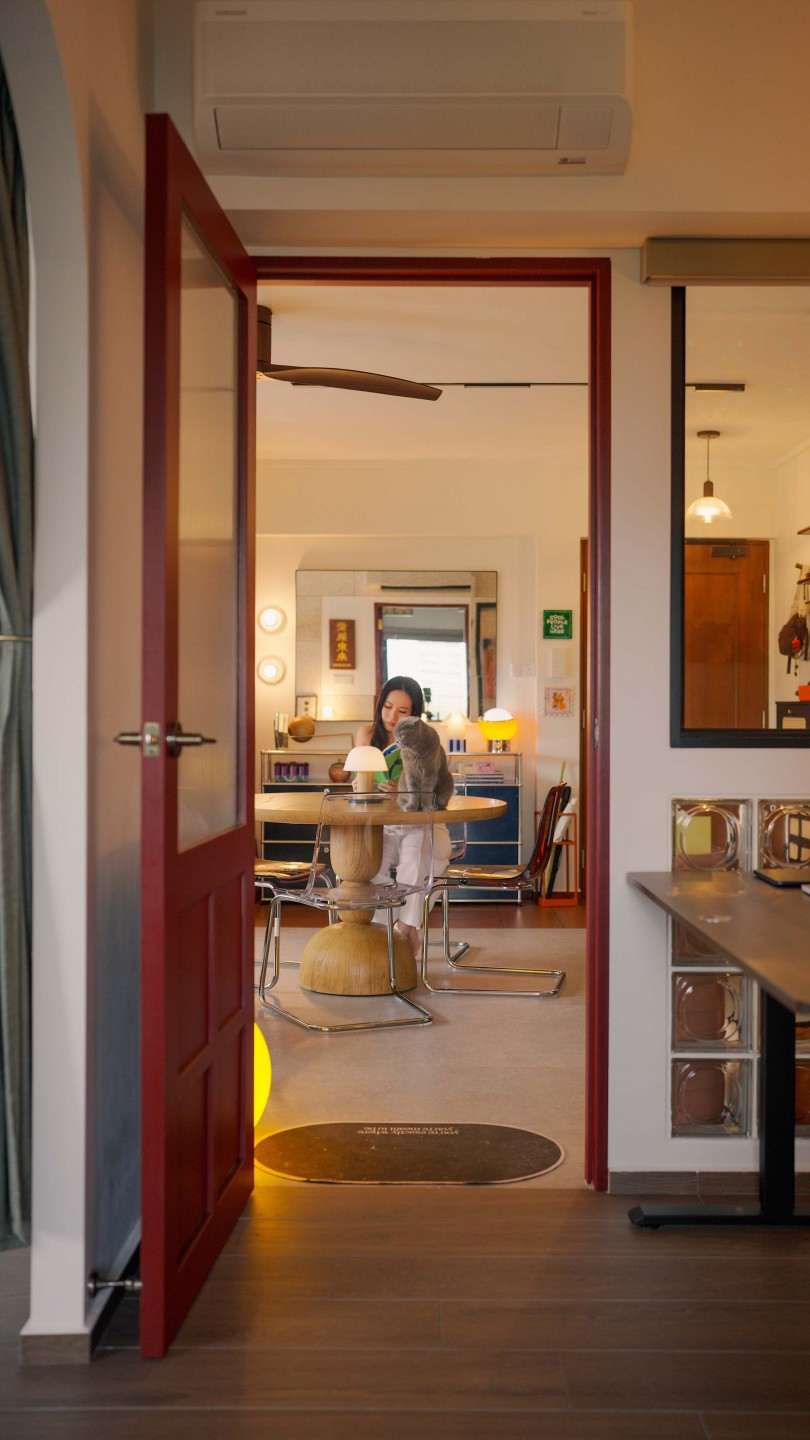
Photo by @18th.hour.
Tell us a little about yourselves and what sparked your interest in sharing your home on Instagram.
We’re Sam (short for Samantha) and Andrew, and we’ve both been working in marketing and PR for over a decade. We’re creatives by training — I come from a graphic design background, while Andrew is an audiophile who studied A&R.
I began sharing our home on Instagram during a period of “funemployment” after leaving my previous role. It started as a visual journal and a way to reconnect with creativity, especially after work had consumed so much of my time. I initially thought it would be a space for me to return to illustration, but it evolved into an outlet for photography, videography and writing instead.
I’ve also loved documenting our weekends and quiet moments with our cats. As time seems to move faster and memories soften with age, it has become a meaningful way to hold on to these small, precious chapters of our lives.
Was your home always this expressive, or did it grow more layered over time?
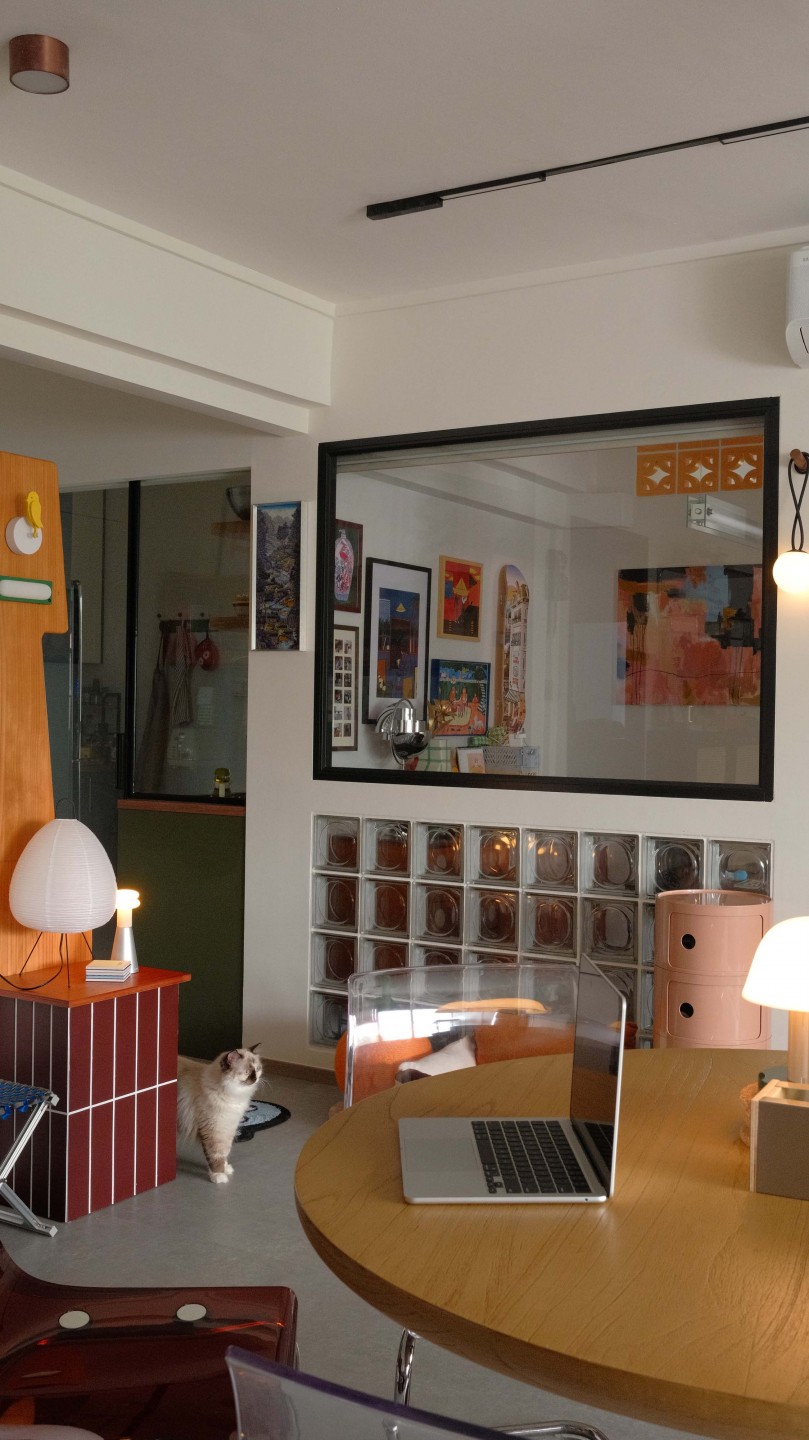
We’ve always gravitated towards expressive spaces because we’re both deeply sentimental. We keep memorabilia, photographs, gifts and little trinkets that remind us of both joyful and difficult seasons.
Naturally, we’ve added more pieces over time — even though we’ve only been here about half a year — but everything still feels reflective of who we are and what we love. One of my favourite compliments is when someone steps in and says, “Your home is so you.”
How do you keep an eclectic home feeling intentional rather than chaotic?
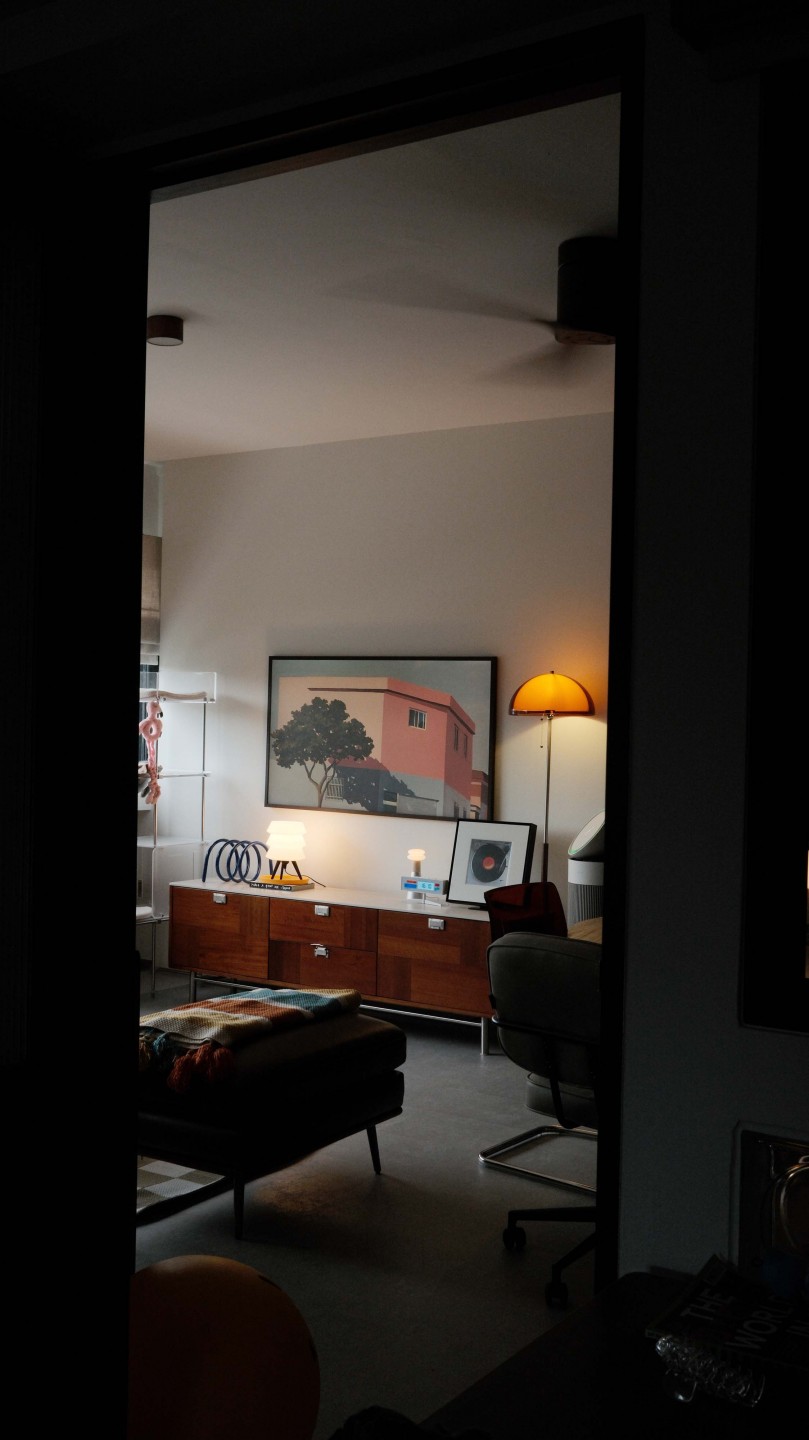
It’s easy to fall in love with a beautiful object in isolation, only to realise later that it doesn’t quite sit right within the larger mood of the home. To maintain cohesion, we always think about where an item will live — a shelf, a console, a specific corner — and whether it will “play well” with what’s already there.
Eclecticism is often mistaken for disorder. But mismatched pieces can still feel harmonious when there’s alignment in colour, texture, materiality or styling. For us, it’s less about matching and more about conversation between objects.
What first inspired you to dedicate an entire room to fostering cats?
Animal rescue has always been close to my heart, and discovering that Andrew shared that compassion meant a great deal to me.
I’ve always had a soft spot for cats, especially knowing how often they are abandoned or mistreated. They’re such gentle, voiceless beings, and I wanted to do my small part. Cats also bring an incredible sense of calm into a home. Sometimes, simply watching them rest feels grounding. As we grow more confident, we may even open our home to fostering other animals in the future.
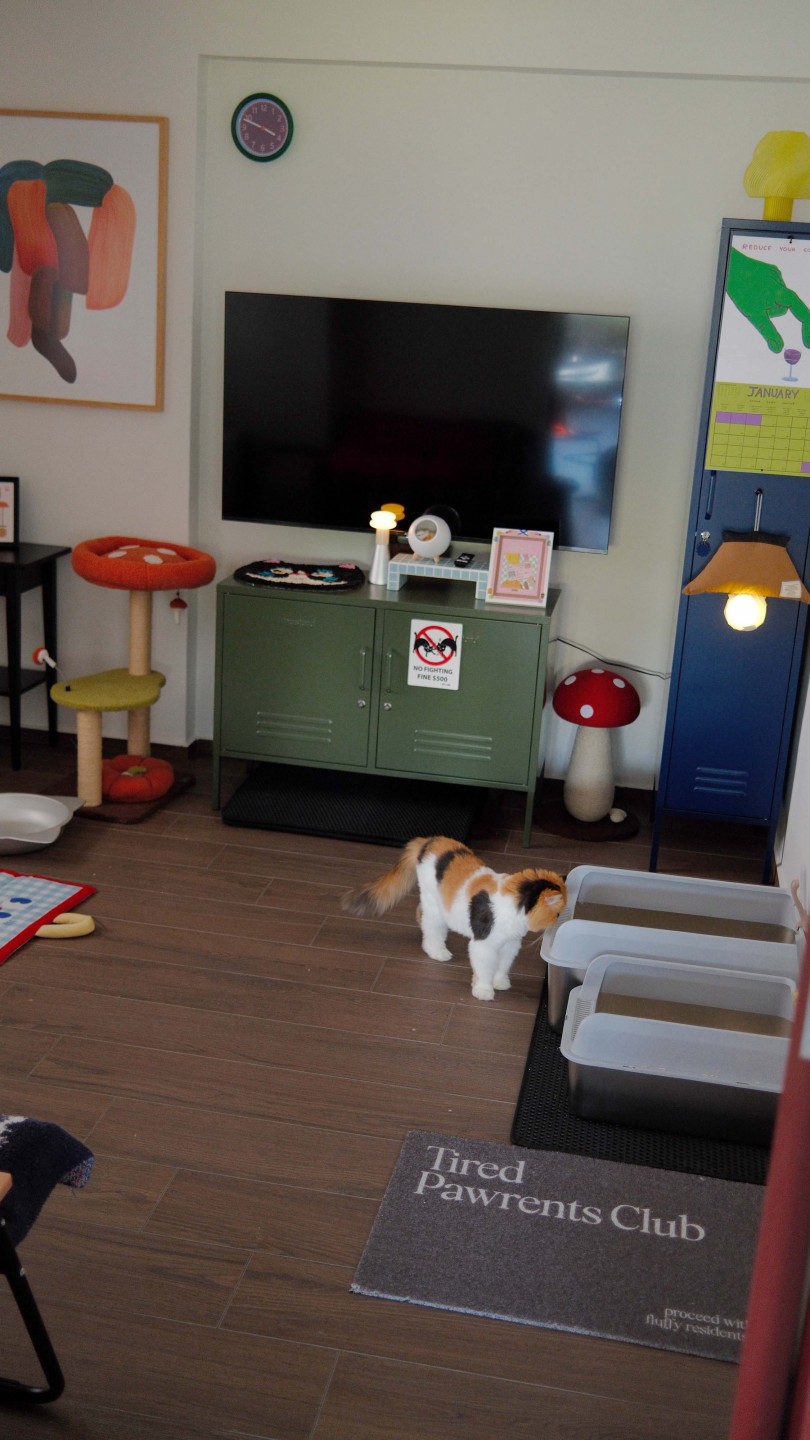
How did you approach designing this room differently from the rest of the house?
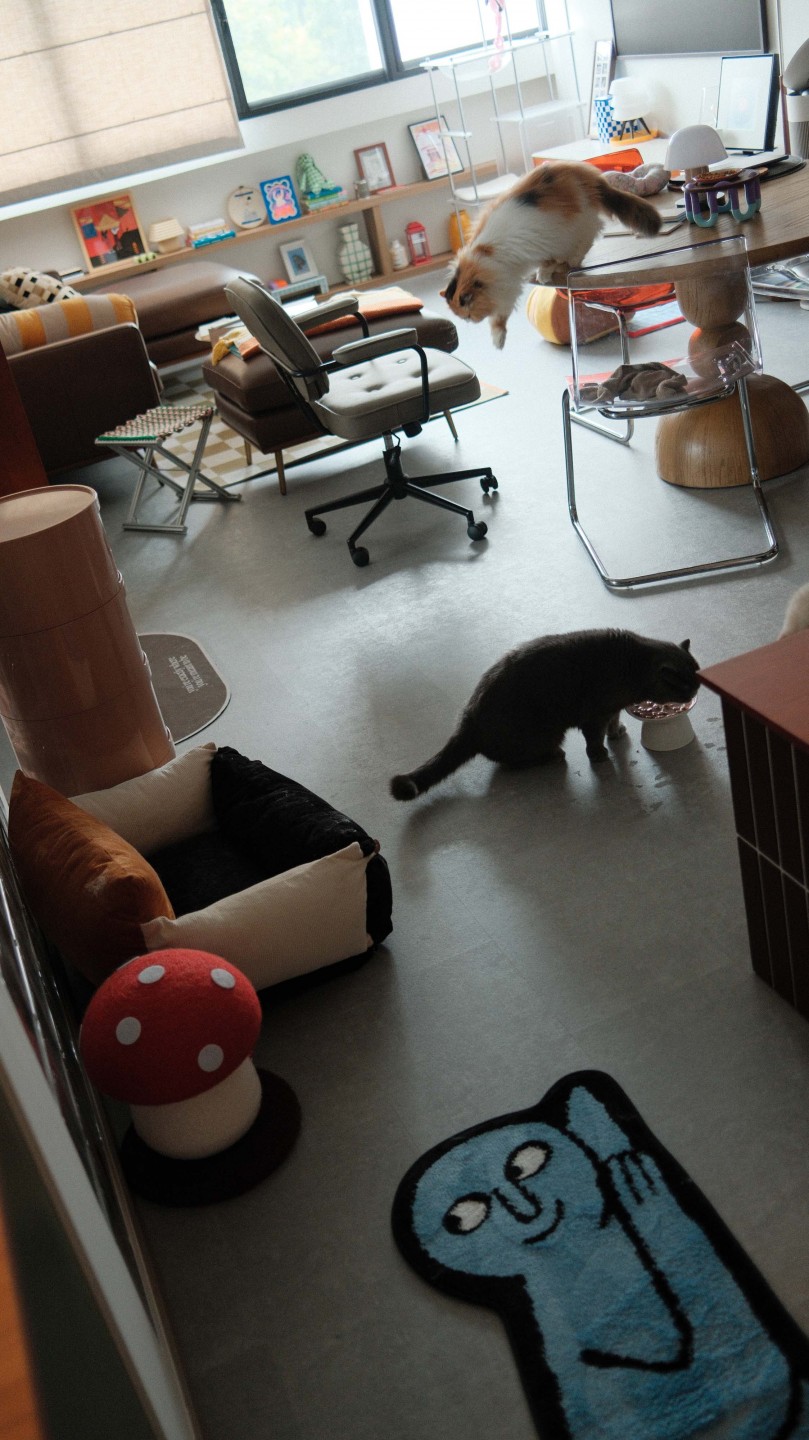
The foster room remains a work in progress and has been one of our biggest design challenges. Unlike the rest of the home, it cannot be shaped purely by our aesthetic preferences. The cats come first. When they’re isolated after rescue, we ask ourselves: What will help them feel safe? What will reduce stress? What will keep them gently stimulated?
A cat seeking refuge doesn’t care whether the furniture is high-end, thrifted or design-forward. They care about warmth, security and comfort, and that is what we prioritise.
How do you make the space feel warm and loving rather than clinical?
For humans, warmth often comes through colour, so I introduce cosy tones that still connect visually with the rest of the home. Interestingly, cats perceive cool tones like blue and violet more distinctly, so we try to strike a quiet balance between both worlds.
Personal touches help immensely. We have custom artwork from Second Floor Neko and a piece illustrated by Andrew’s mother. These details make the room feel like an extension of our family rather than a temporary holding space.
We also embrace a little dopamine decor for the cats, like scratchers shaped like tuna cans or mushrooms. They’re functional, and playful. There’s even a television dedicated to “cat TV,” where birds and squirrels hop across the screen for their viewing pleasure.
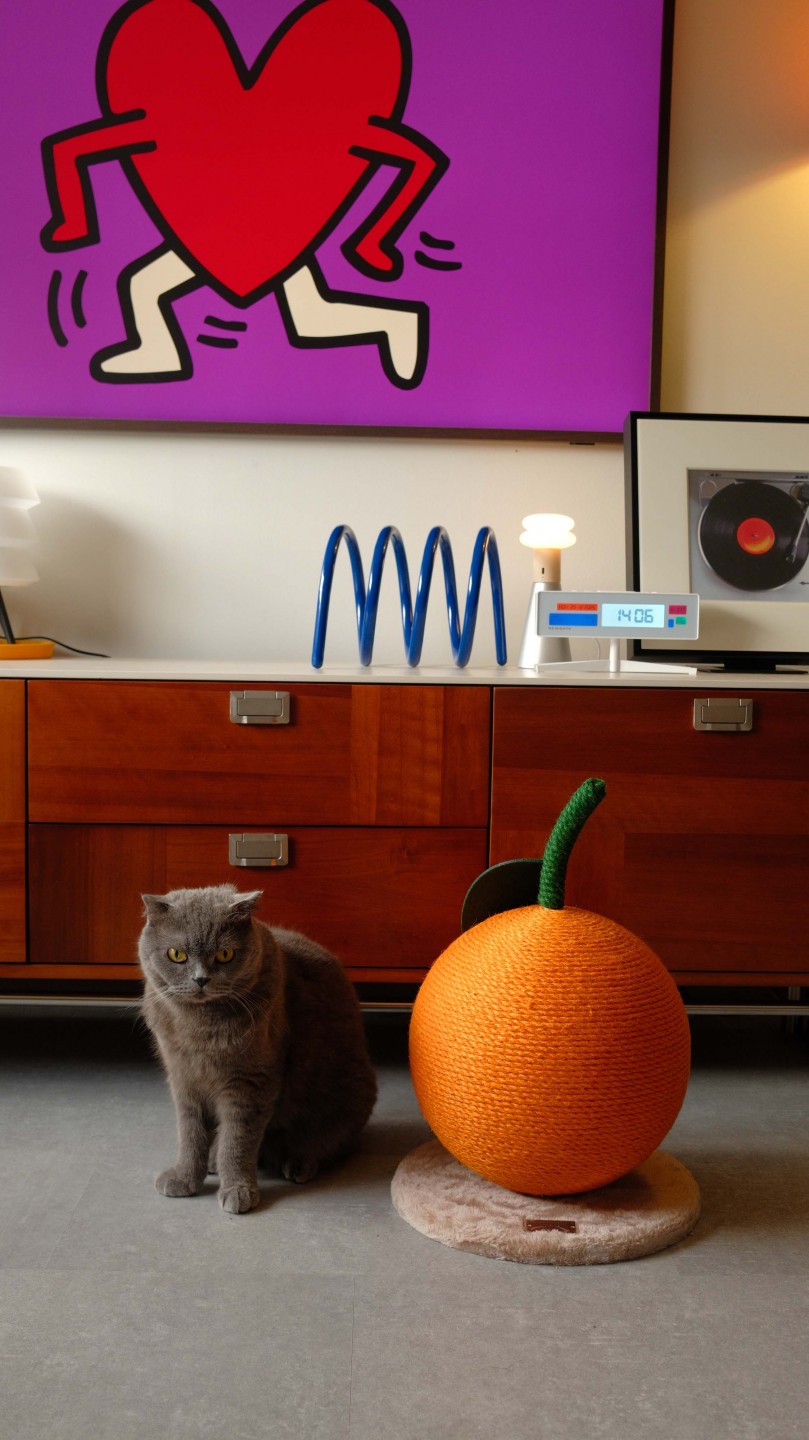
What’s one thoughtful detail in the foster room that people might not notice immediately?
We intentionally avoid overly tall perches, even though many people ask why we haven’t installed wall-mounted cat steps like those in cat cafés. While cats instinctively enjoy height, many foster cats may be recovering from surgery or still adjusting to new surroundings.
For their safety, we keep the cat tree and window hammock at gentler, lower levels. They still experience that instinctive sense of elevation and security, without unnecessary risk.
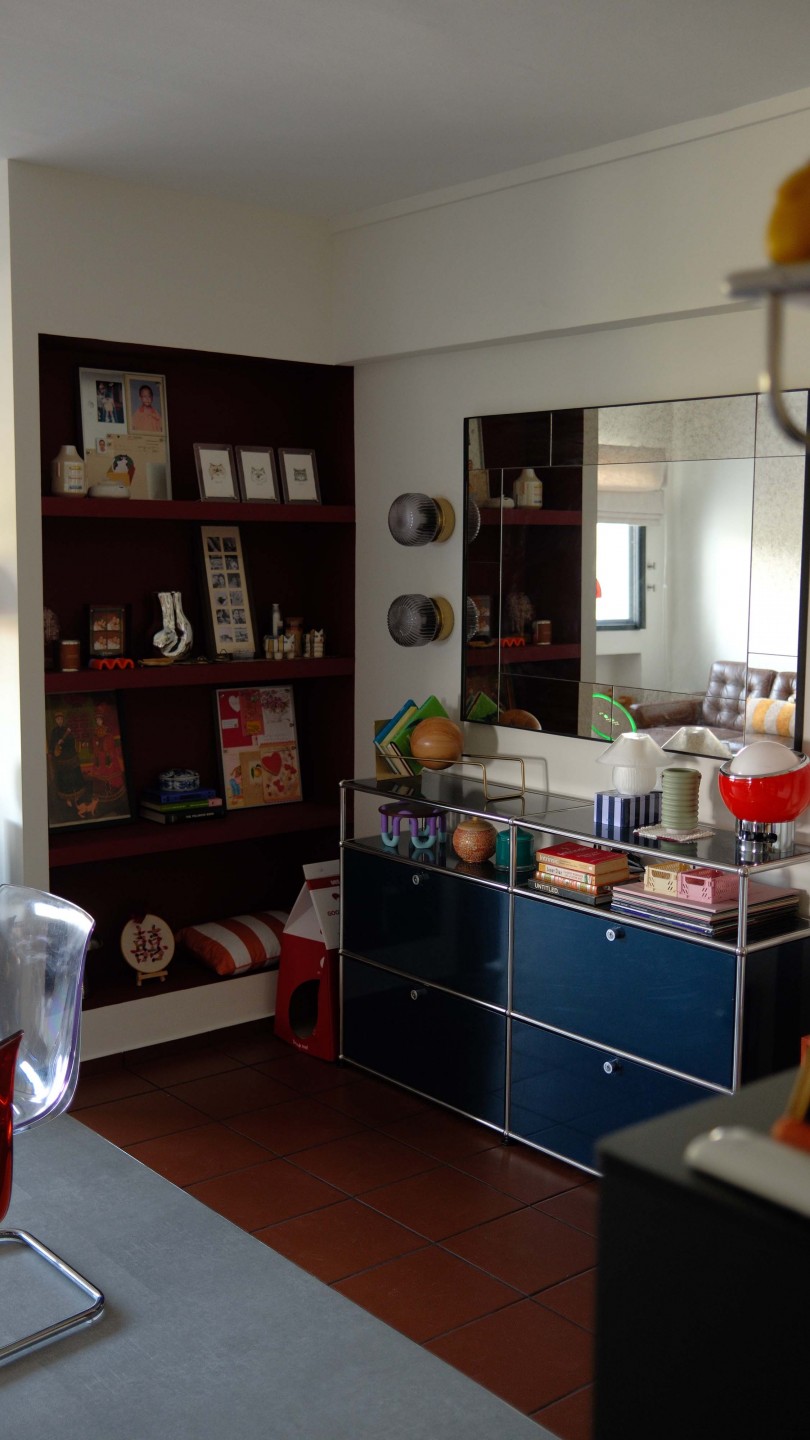
What’s your approach to storing foster supplies without disrupting the aesthetic?
As with most homes, it comes down to balance. If something feels visually intrusive — medication or supplies, for instance — you either decant it into more considered containers or conceal it within beautiful storage.
We opted for the latter. In the foster room, we use IKEA pieces and Mustard Lockers for clean, practical storage. In the living room, our own cats’ essentials are neatly housed
in a Kartell Componibili, which blends seamlessly into
the space.
If your home had a soundtrack, what song would describe the mood?
Andrew and I joke that our three cats’ theme song would be “Why Can’t We Be Friends” by War. They’re constantly squabbling over the smallest things, and we find it endlessly amusing. We even have a “No Fighting – Fine $500” sign in the cat room.
For the home as a whole, however, it would be Haley Reinhart’s cover of “Can’t Help Falling in Love.” It reflects the deep affection we have for our little family and this space. As a bonus, it was the song I used in the slideshow when I proposed to Andrew.
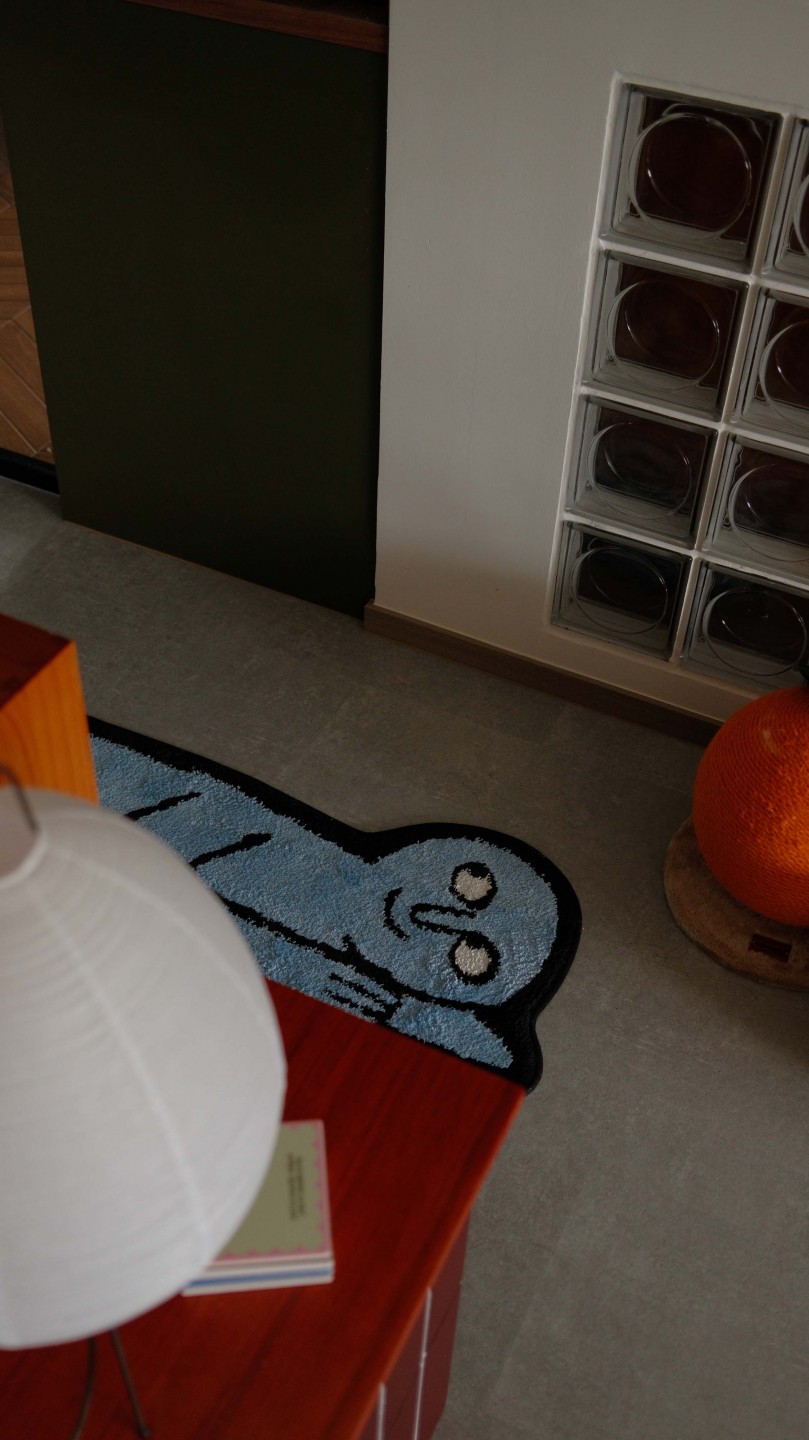
Lastly, if your cat could describe your home in three words, what would they be?
Safe. Loving. Warm. They’re truly the real owners of this home. Aesthetics matter far less to them than peace and comfort. More than anything, we hope they always feel deeply cared for here.


