A 1,250 sqft condominium – complete with three bedrooms, a utility room, and a yard – is not something you come across easily these days. Having all but disappeared from new launches, they now reside almost exclusively in older resale developments, which come with a shorter remaining lease and signs of age.
For some homeowners, however, these are trade-offs worth making if it means having more room for their kids to run around. Or in the case of this couple in their 30s, for their two cats to roam freely.
“The homeowners are cat lovers, and very open, adventurous, and playful people,” said lead designer Alex Chua of ROOOT studio.
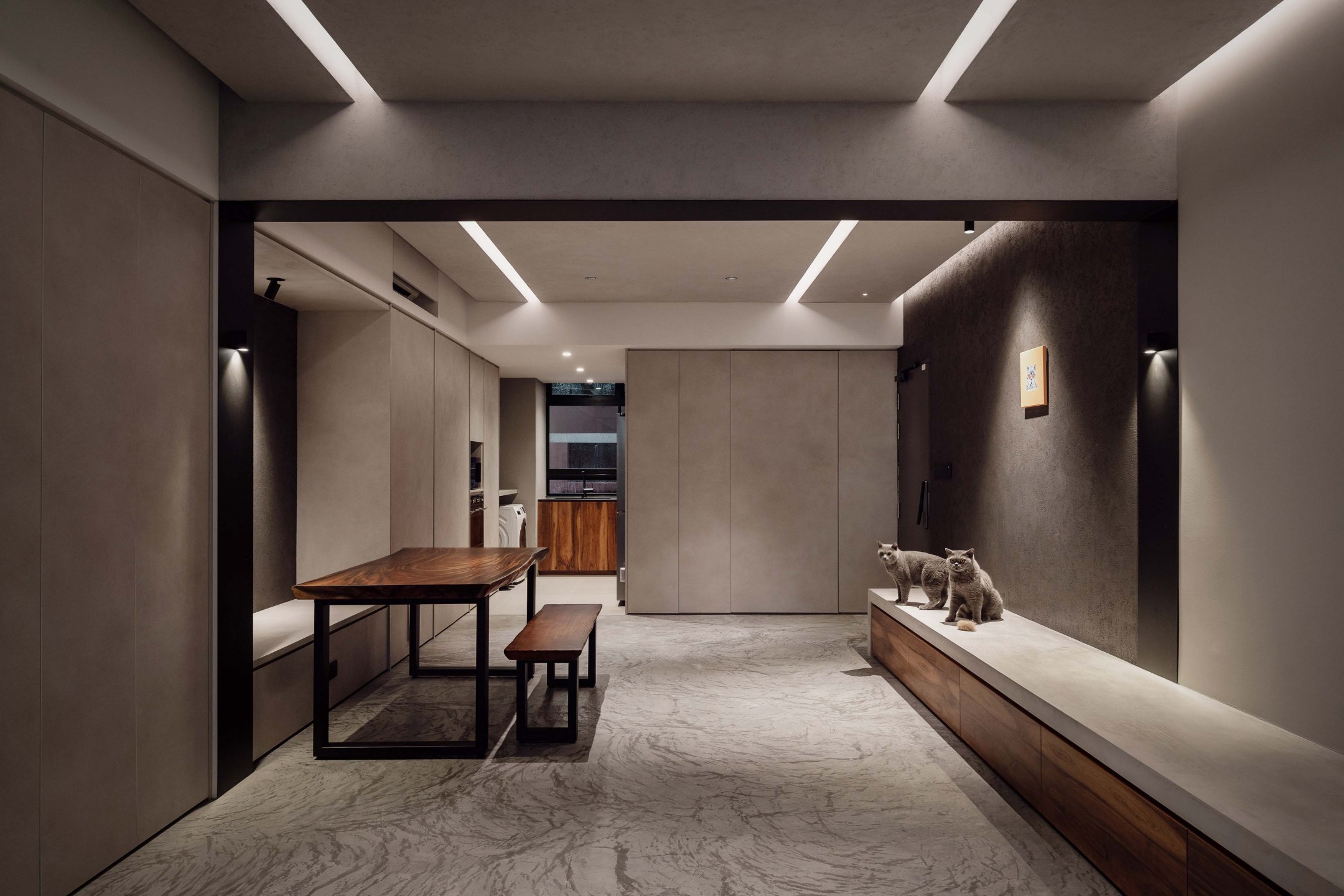
“And since they both work in UI/UX, they naturally think a lot about the user experience of a space.”
Although the 30-year-old unit offered a fuss-free layout, its age brings its own set of complications, including beams of varying heights cutting across the ceilings. And as the design team brainstormed ways to conceal them, a creative direction slowly took shape.
“We didn’t really work with a certain theme. Rather, it’s the final result of us trying to conceal its unsightly parts.”
While at that, the team also incorporated cat-friendly elements, hiding perches, nooks, and tunnels in plain sight.
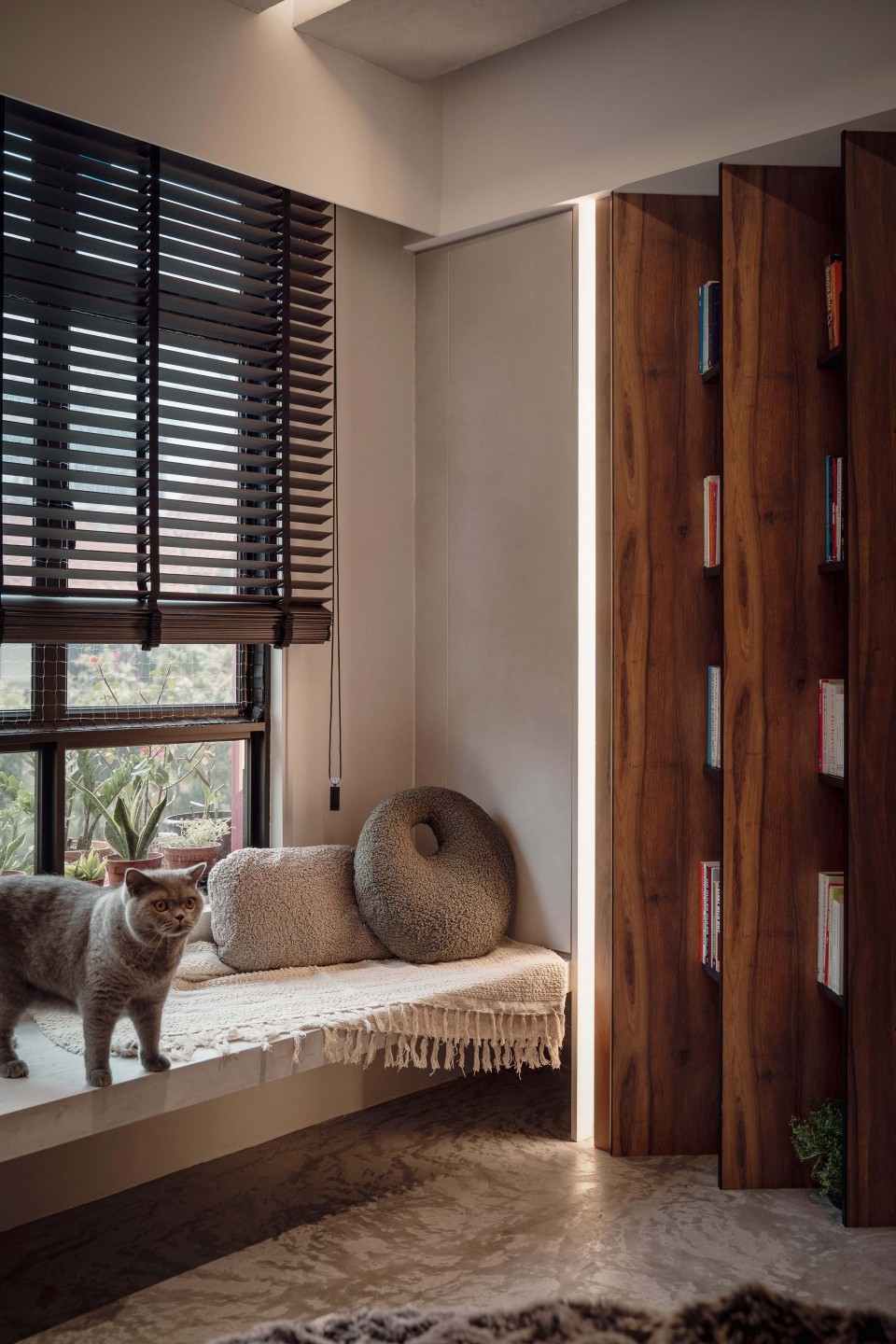
“We built them into the walls and furniture so they feel like part of the design and not add-ons. That way, the sightlines stay clean, just as the homeowners wanted.”
Step inside and the first thing you notice is how spacious the home feels. Just as surprising is the “storeroom” tucked beside the entrance — a prized relic from older condominiums — which has been repositioned for convenience.
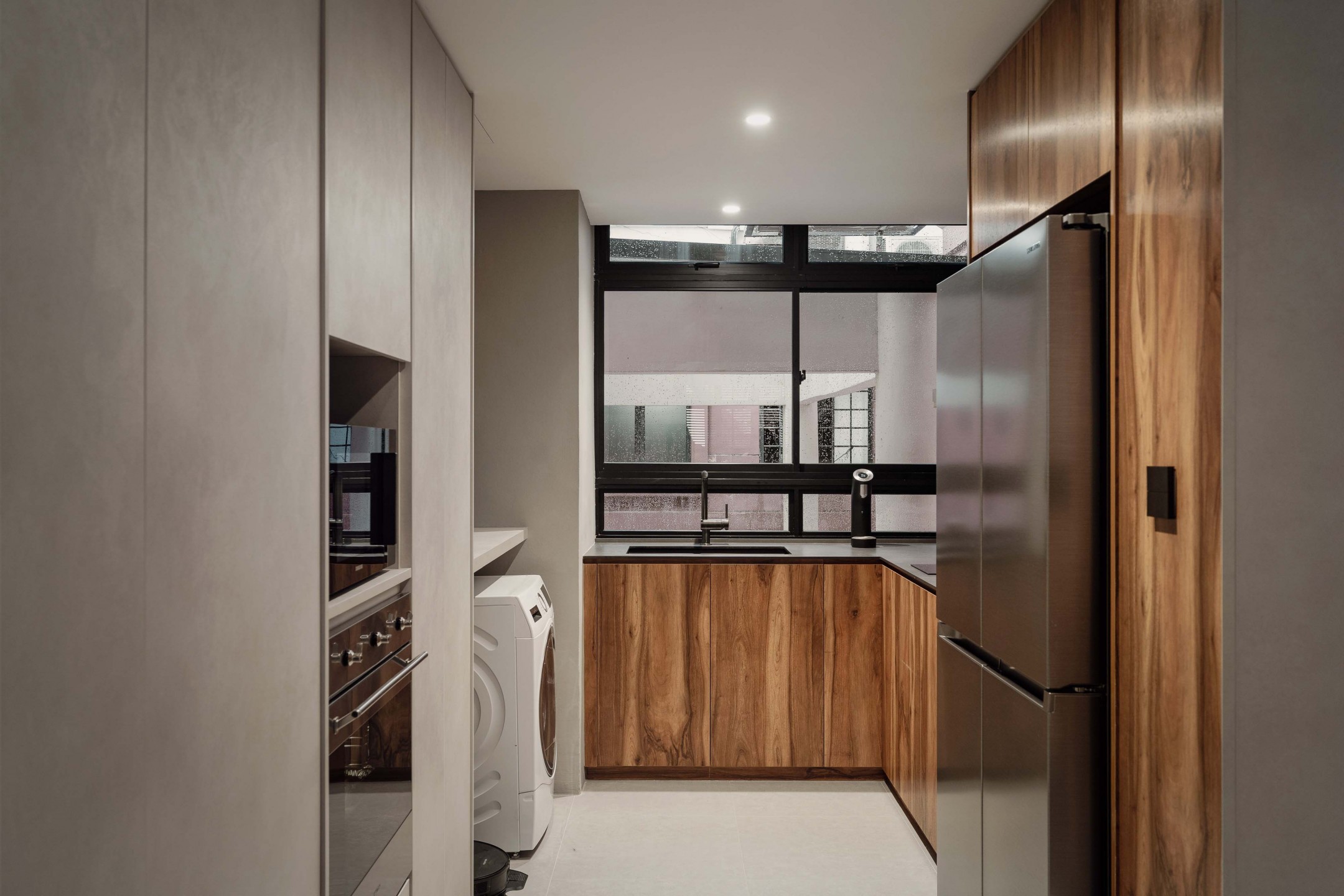
“As the storeroom is placed beside the entrance, it’s easier for the homeowners to access their bicycles,” said Alex, adding that this is the result of reworking the kitchen, yard, and utility room placements.
As a result, the kitchen now faces the dining area, making it easier to serve food when hosting.
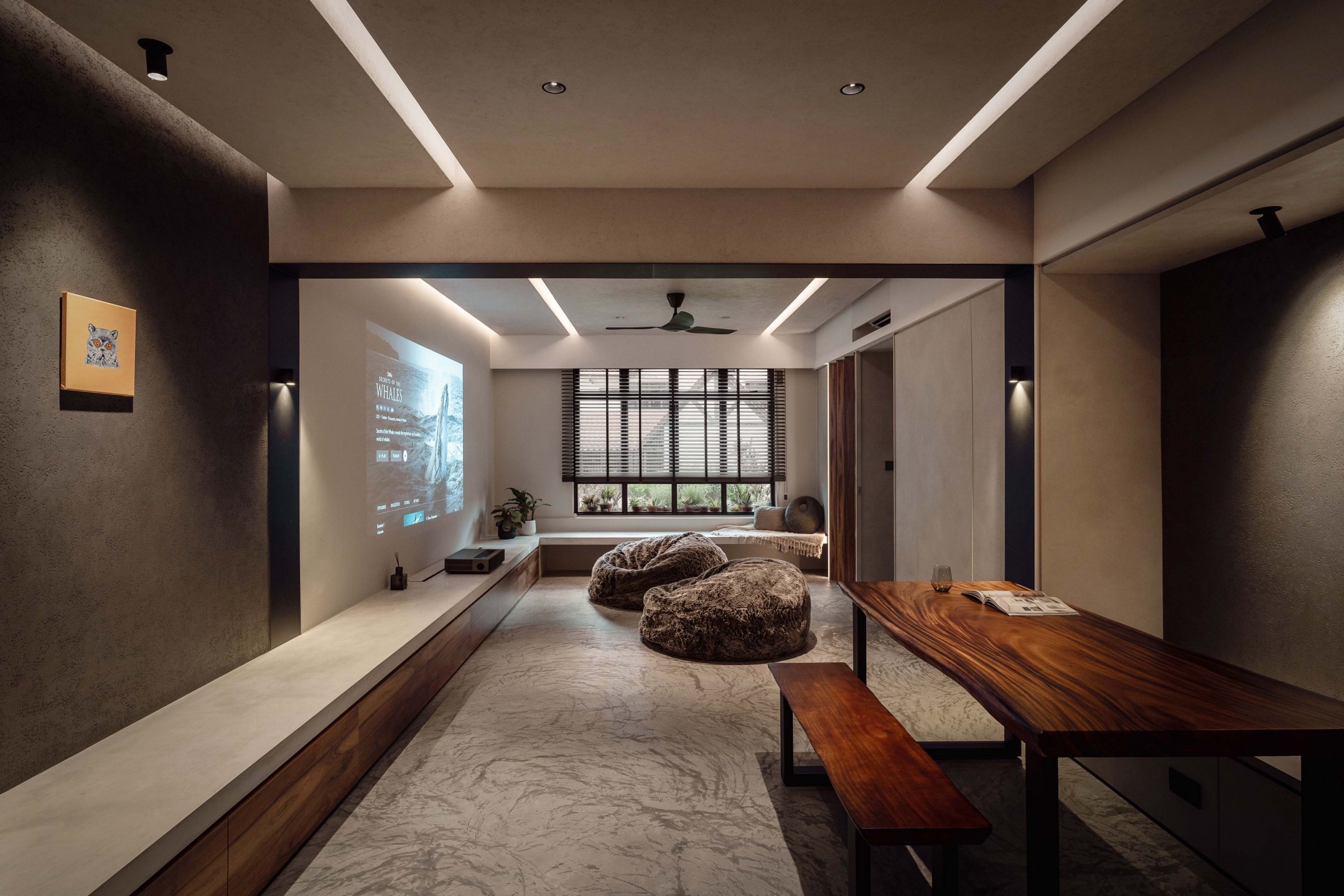
Entertaining is a clear priority in the communal areas. An L-shaped settee stretches from the entrance to the TV console and window, maximising seating when the homeowners welcome large groups of friends, although it’s more frequently used as a runway for their feline friends to strut along.
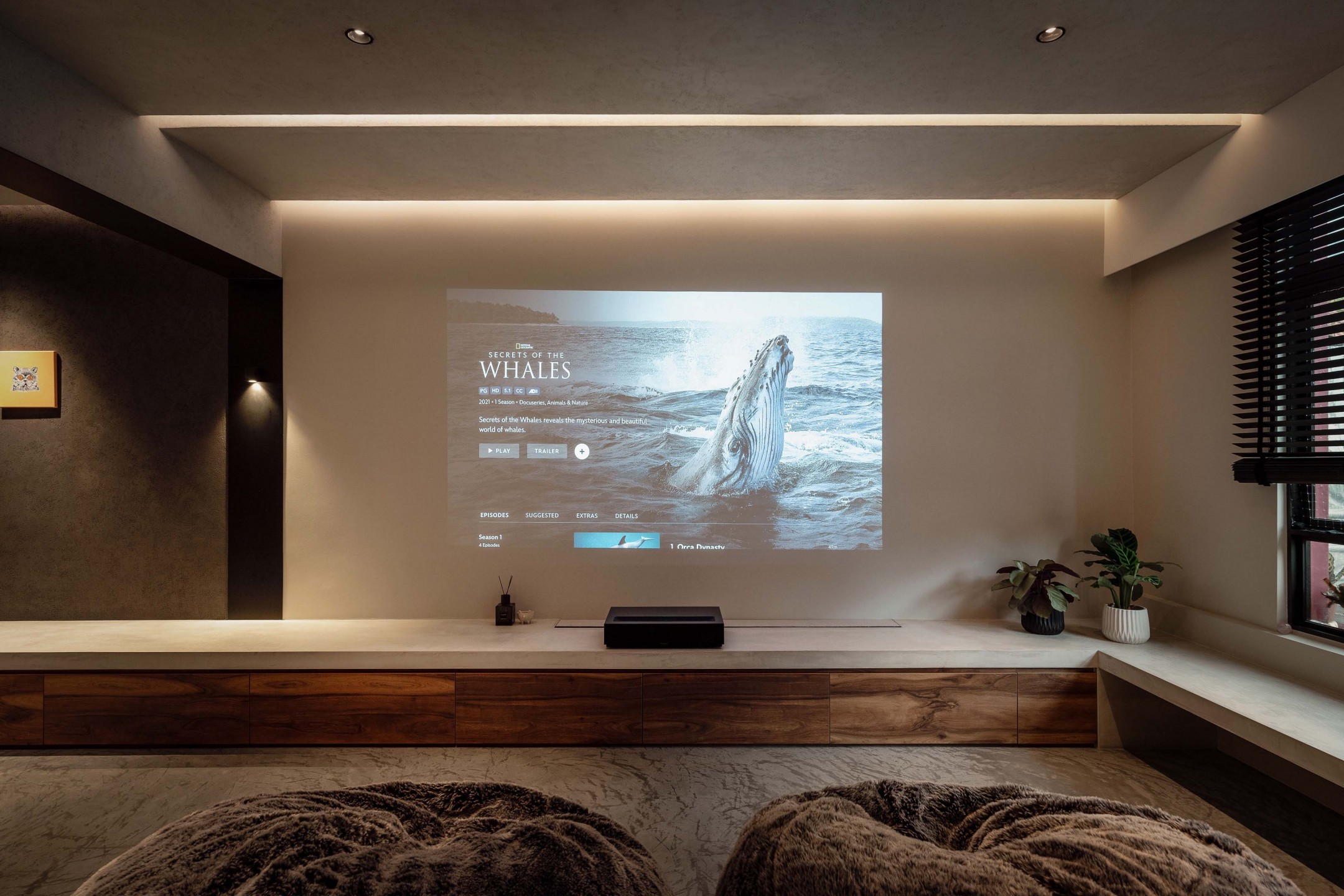
The settee, along with linear cove lighting overhead, reinforces the length of the space, while material choices hold everything together. From the cement screed flooring underfoot to the cohesive limewash finish that wraps around the space, the living area feels both expansive and contained. In fact, it is only when their cat slips through a discreet flap door that you’re reminded there’s more.
The bedrooms and bathrooms on the other side of the wall — the “back of house”, if you will — have been reconfigured so they can be neatly concealed, leaving a narrow corridor that doubles as a private play route for the cats.
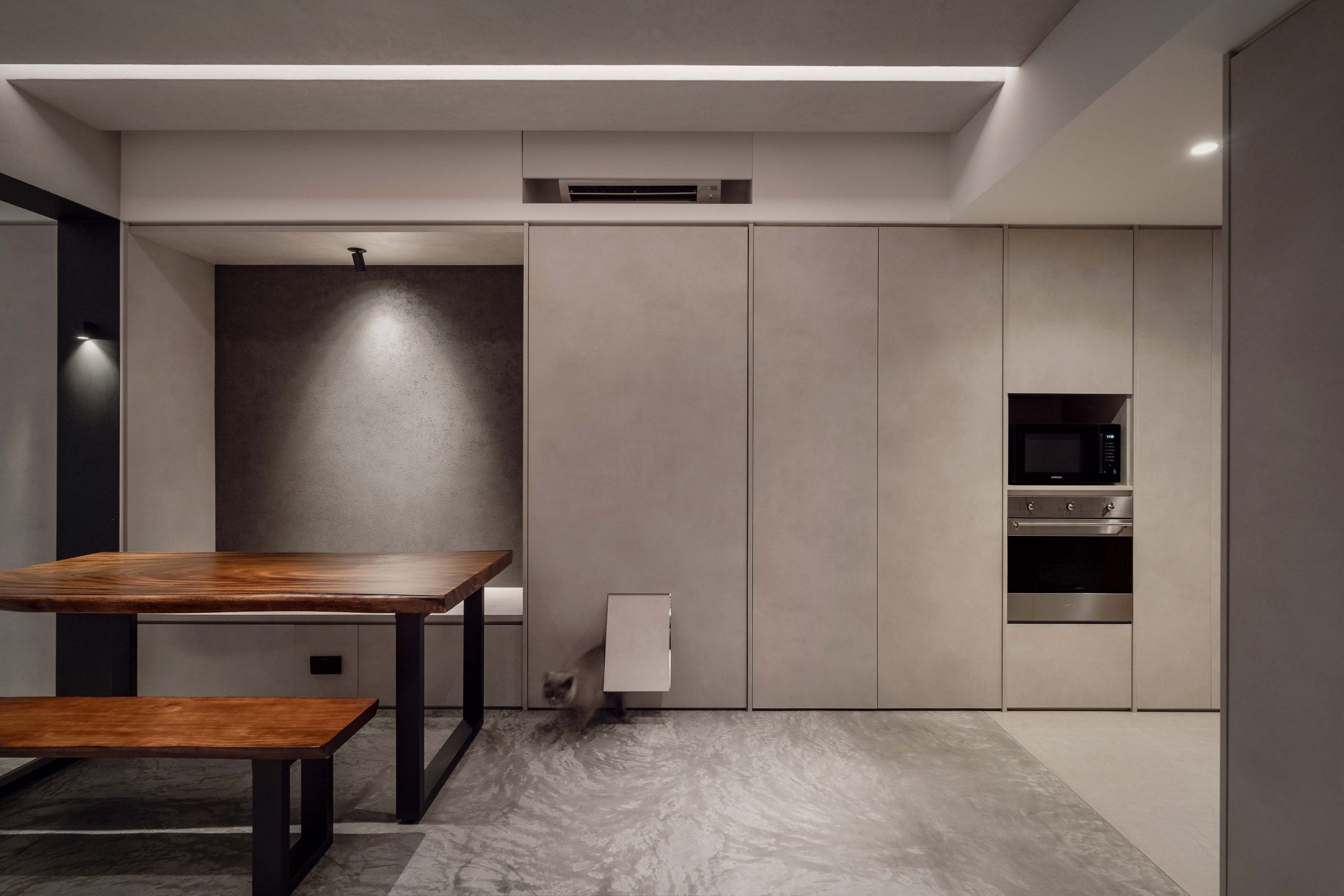
“By blurring the boundaries between human and pet spaces, the design celebrates both connection and independence,” Alex said.
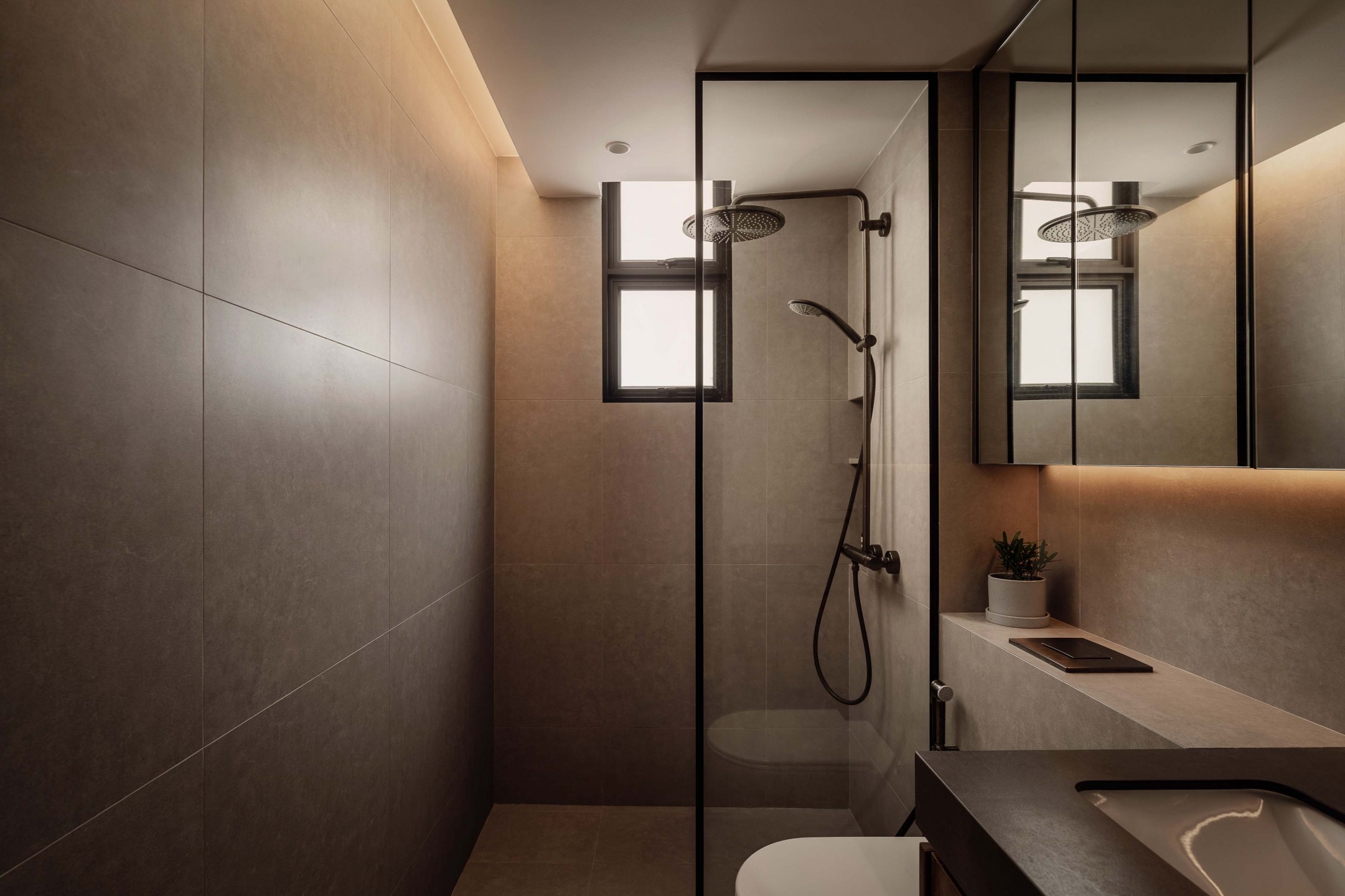
These changes also improve the apartment’s functionality. Concealing the common bathroom from the living area creates a greater sense of privacy, while the master bedroom makes room for more wardrobe space. The bathroom entrance has also been shifted away from the sleeping area, so one partner can get up earlier without disturbing the other.
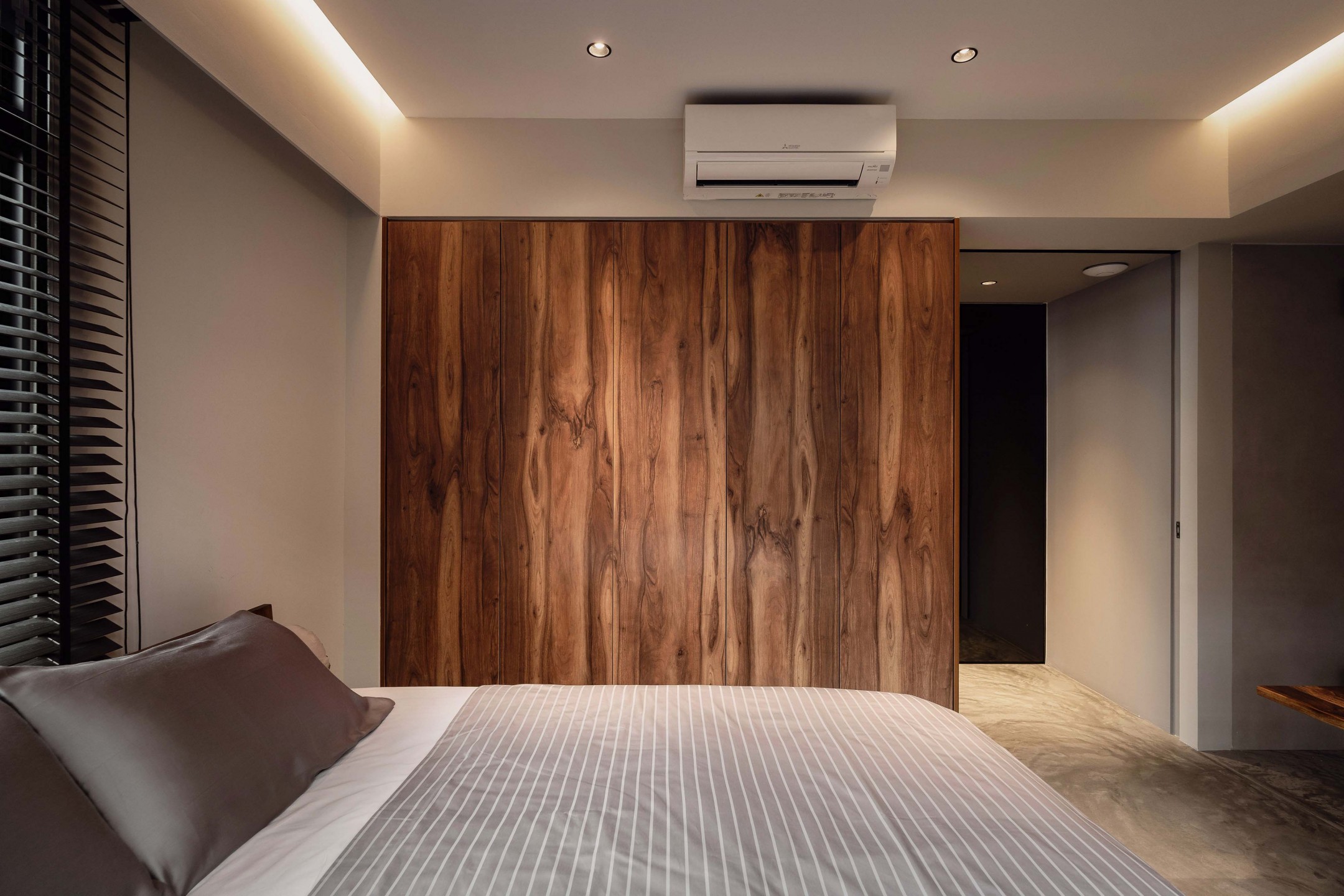
“By paying keen attention to the habits of both the homeowners and their cats, we managed to create a home where industrial aesthetics can also be warm, inviting, and unexpectedly fun.”
Words: Joyce Yang



