By the time Renostud.io landed this 570-sqft loft in Woods Square, the studio had already tried out two workspaces that left much to be desired. The first was a co-working office they could not quite call their own. The second was a small rental unit fitted out with flat-pack furniture to keep things modular.
“I did not want any built-ins apart from the flooring and some lights, because the long term plan was always to move to a more permanent home,” said founder Jeremy Tan.
“This presented a problem: we could not let visitors experience a space that we had created.”
The impermanent setup not only cost the firm a chance to make a strong first impression; it was also far from functional. For instance, despite a five-metre-high ceiling, the team could not make use of vertical storage without carpentry.
So when the team grew and the chance for a do-over finally arrived, Jeremy wanted to get things right. While he was keen to showcase the studio’s design prowess, he said he also wanted to create a space where his designers, who would spend the most time there, could work happily. The office would therefore need more seats, more storage, and a mix of communal and private spaces for meetings and focused work.
Jeremy began this design journey after returning from London and Paris, where he was inspired by the attention to detail, bold use of colour and meticulous moulding in their architectural landmarks. He sought to bring these European architectural influences into Renostud.io’s new home, starting at the entrance.
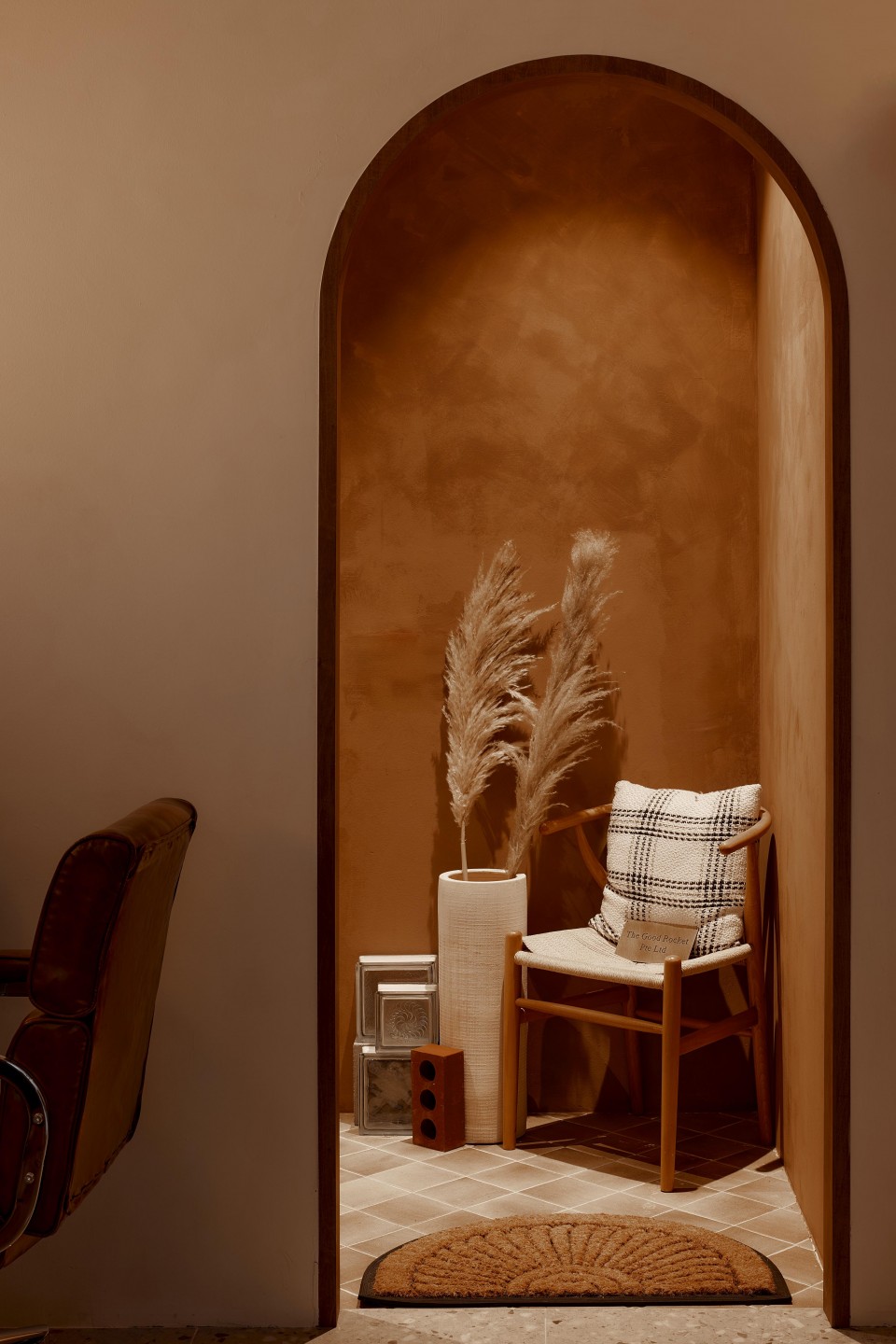
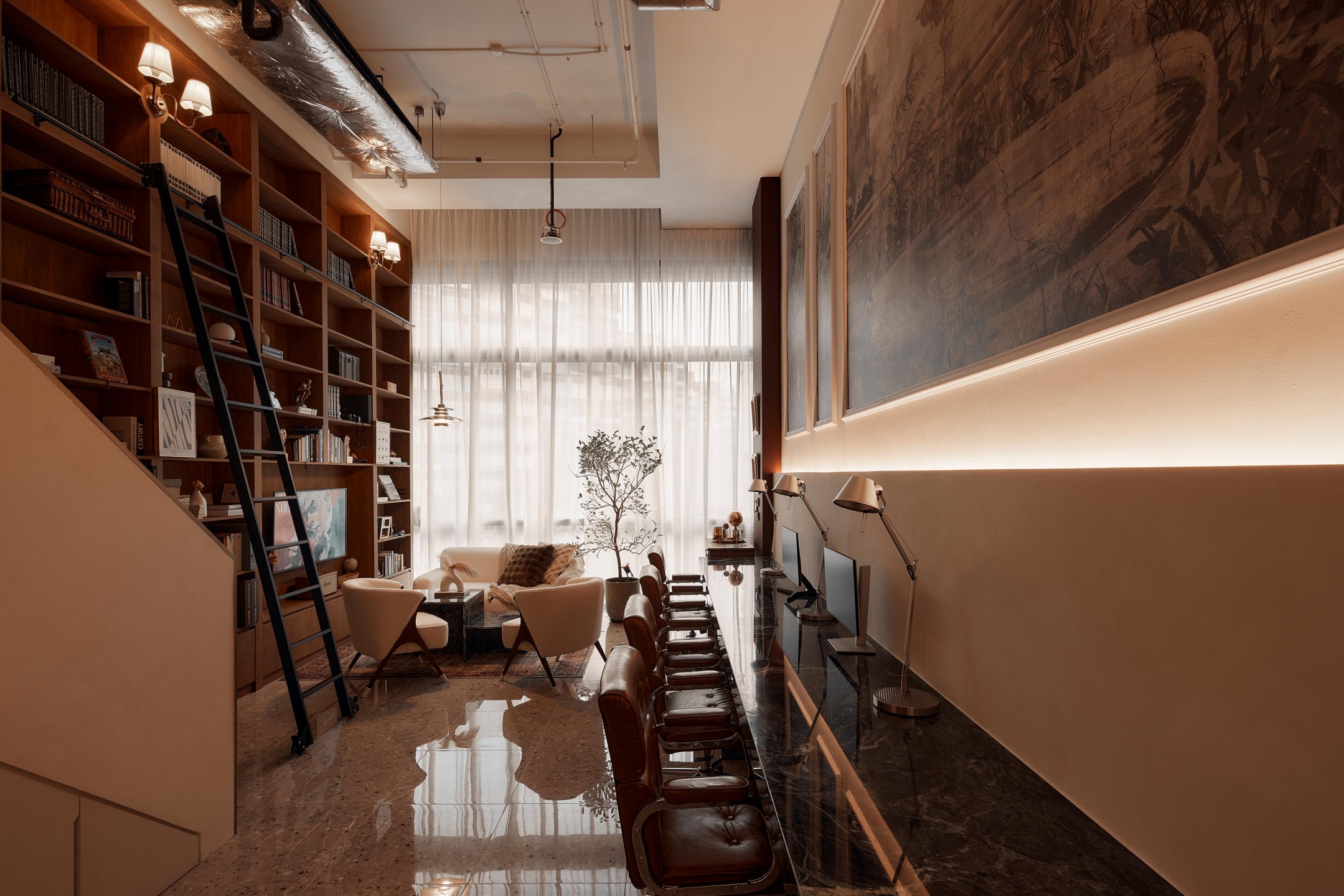
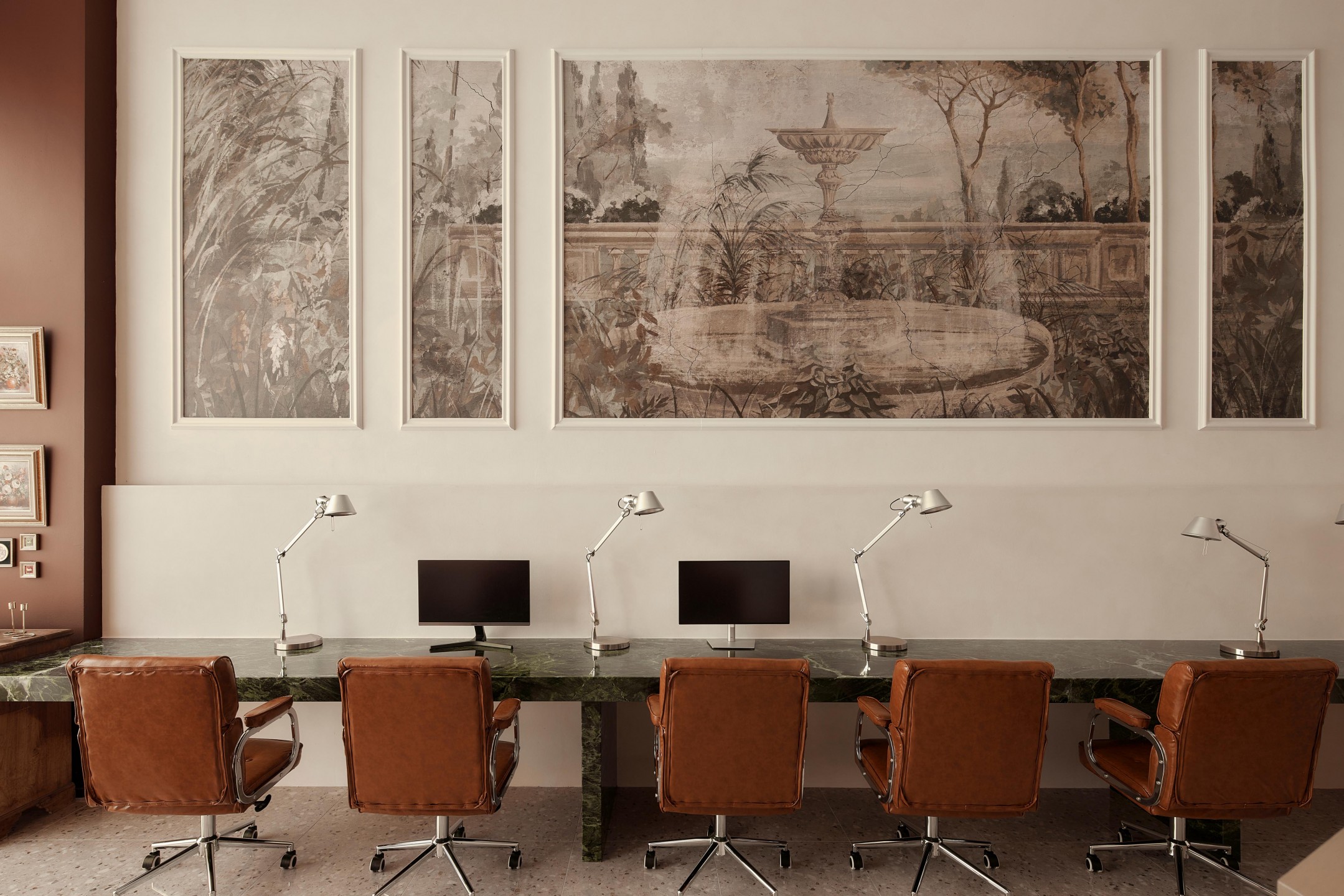
The foyer is defined by tiles more commonly seen in outdoor spaces, laid in a diamond pattern. The area also helps shield the eight-metre work desk, which accommodates six 1.3-metre-wide workstations, Jeremy explained.
“I decided early on to add a touch of luxury, hence all work desks were made using Prada green marble from Italy.”
Installing the marble proved to be one of the biggest challenges. While Jeremy wanted the desks to appear to float so the office would feel more spacious, the walls were not strong enough to support the weight of the stone. To make it work, three metal legs had to be fabricated and wrapped in marble, a painstaking solution that allowed him to keep his preferred material.
“The marble was simply a material that really spoke to me,” he quipped.
The space above the workstations was treated with the same sense of indulgence. An image of a garden and water fountain is framed within moulding that Jeremy proportioned using the golden ratio. He also specially selected the image from Shutterstock to introduce a touch of nature and maintain the brown-and-green colour palette he had envisioned.
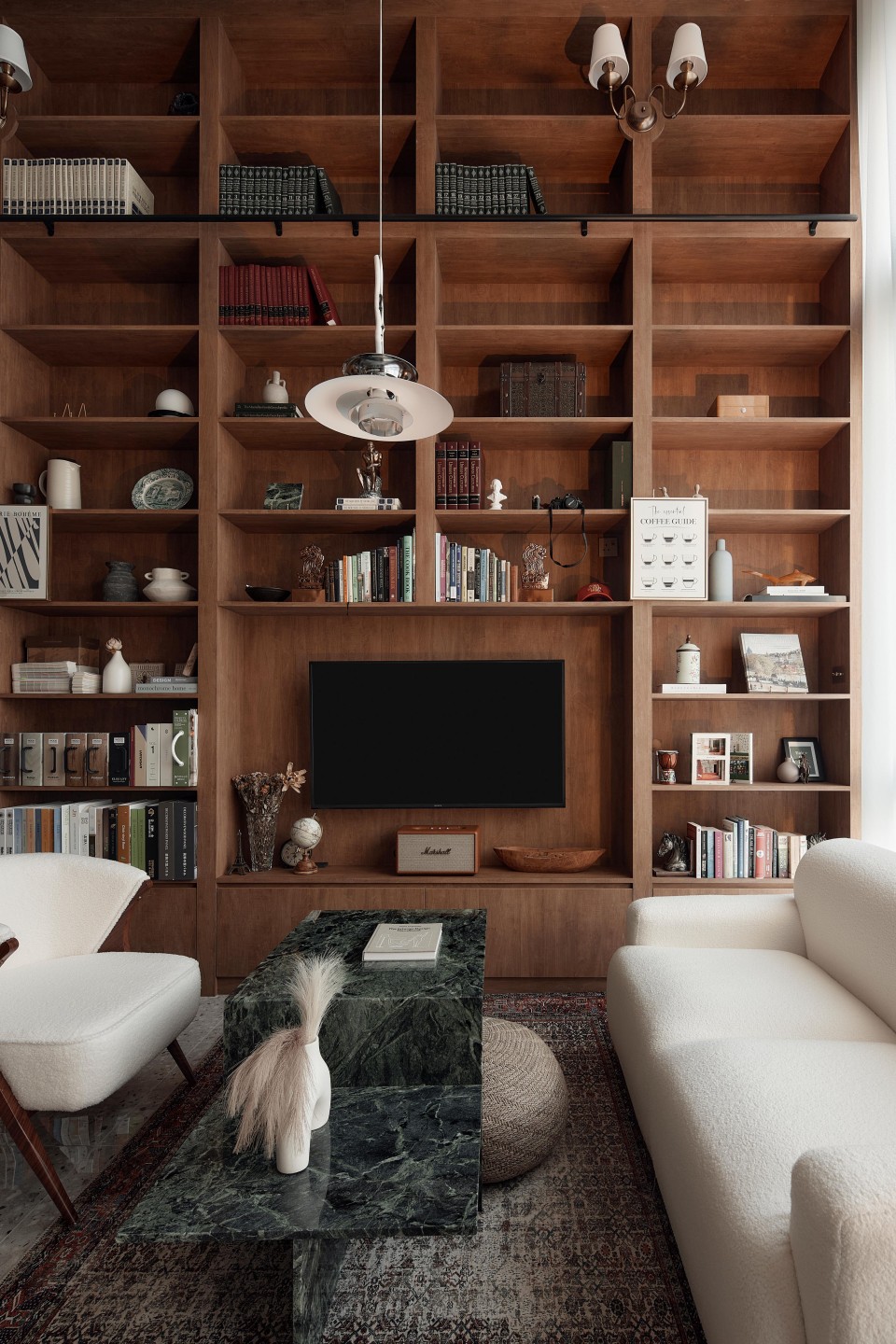
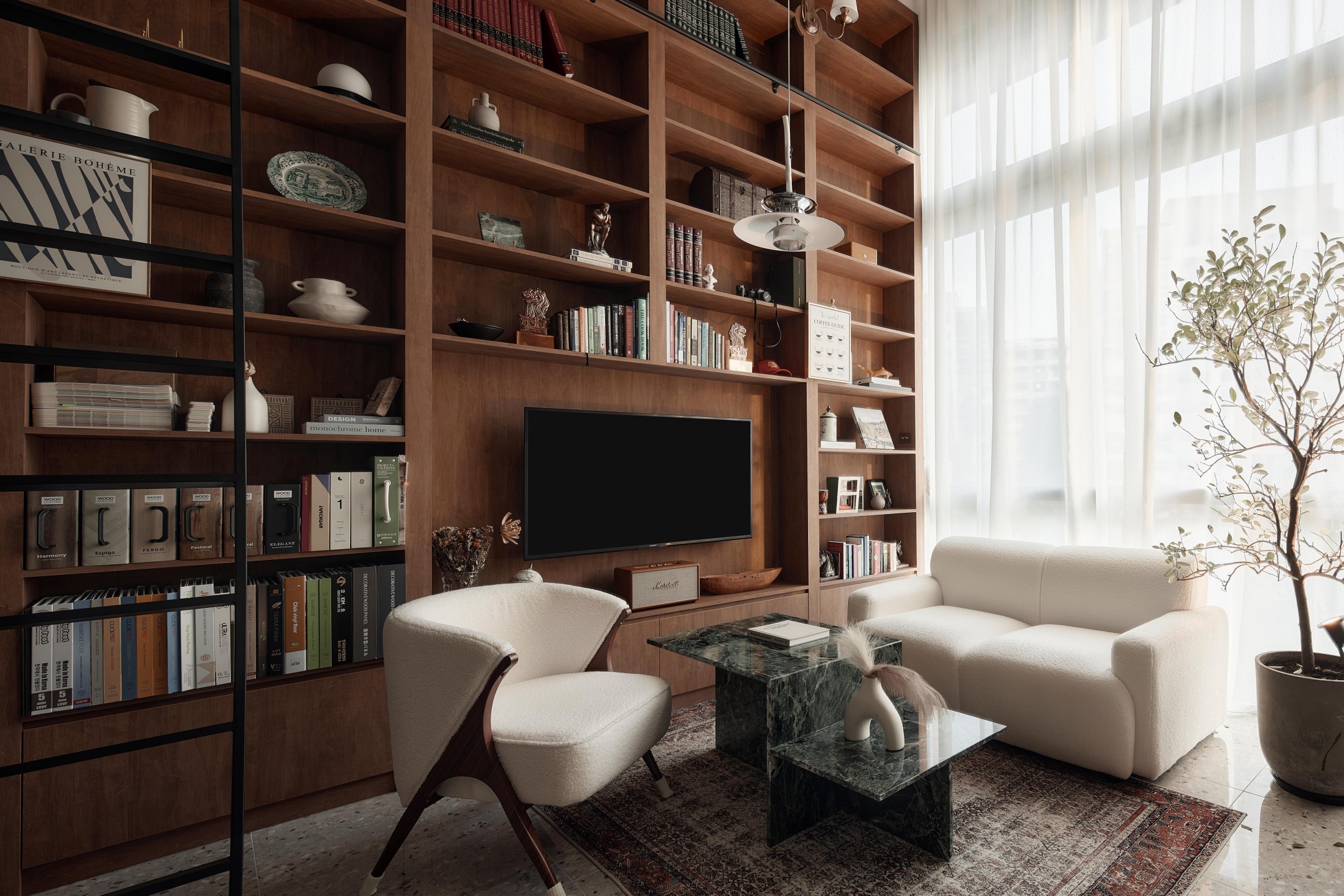
Across the room, a full-height wooden bookshelf covers the entire wall, finally putting the lofty ceiling to good use in a way the team could not in their previous office. Every compartment was designed to be the same size, except for the TV niche, which required careful measuring and re-measuring so the screen would sit at just the right height.
The wall has since become the backdrop for meetings and presentations. To soften its presence, Jeremy placed a boucle sofa and armchair on either side of an asymmetrical coffee table, which was crafted from the same green marble.
“I’m happy to say that of the three slabs of marble bought, none was wasted,” he beamed.
According to Jeremy, clients spend most of their time in the lounge area and often wander off mid-meeting to browse the items displayed on the shelves. Outside of client sessions, it has also become the designers’ living room, encouraging them to spend time together and exchange ideas.
“The office feels like a sanctuary especially after visits to project sites, which are generally hot and dusty,” he said.
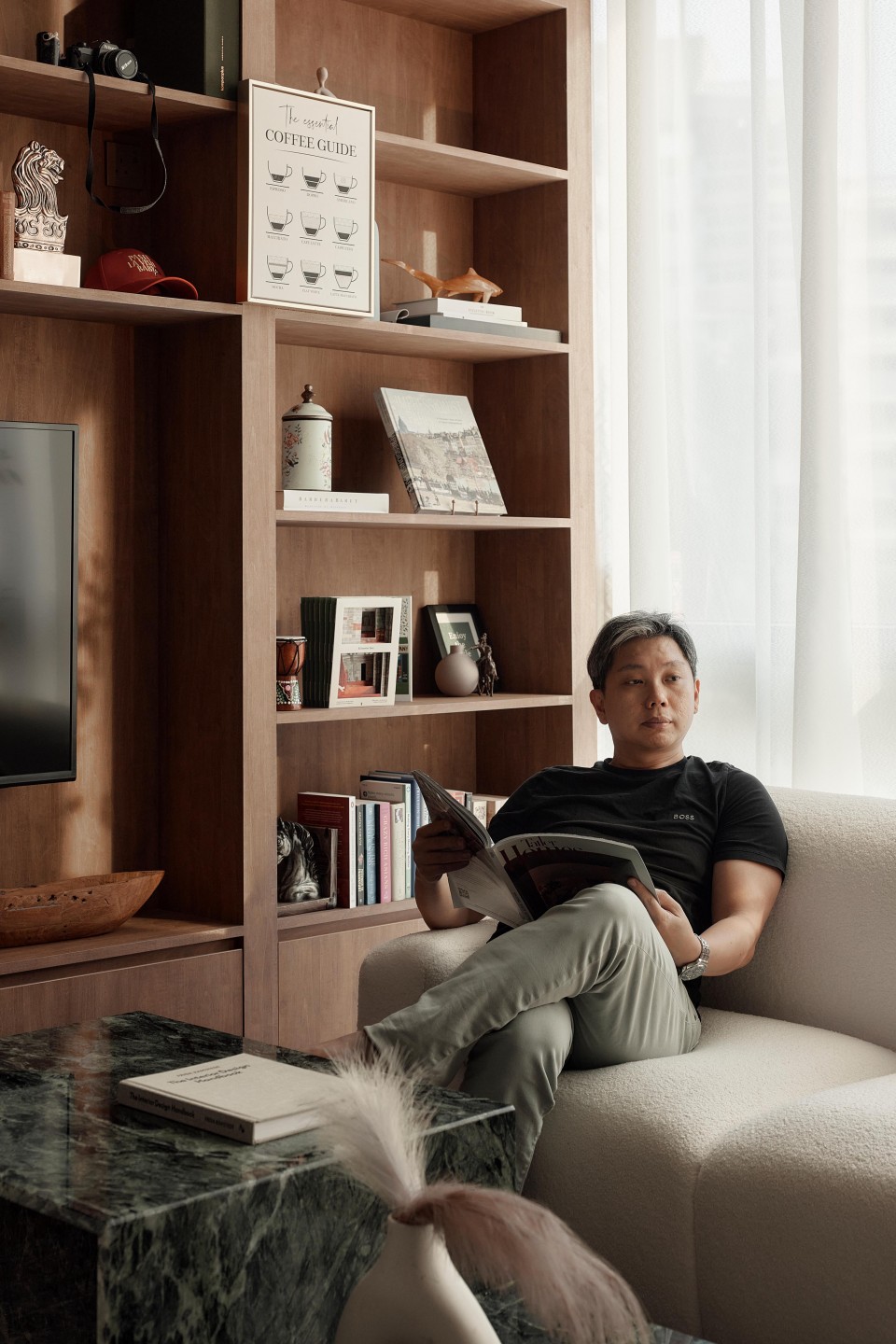
“In fact, I have spent many weekends reading in the office.”
Words: Joyce Yang



