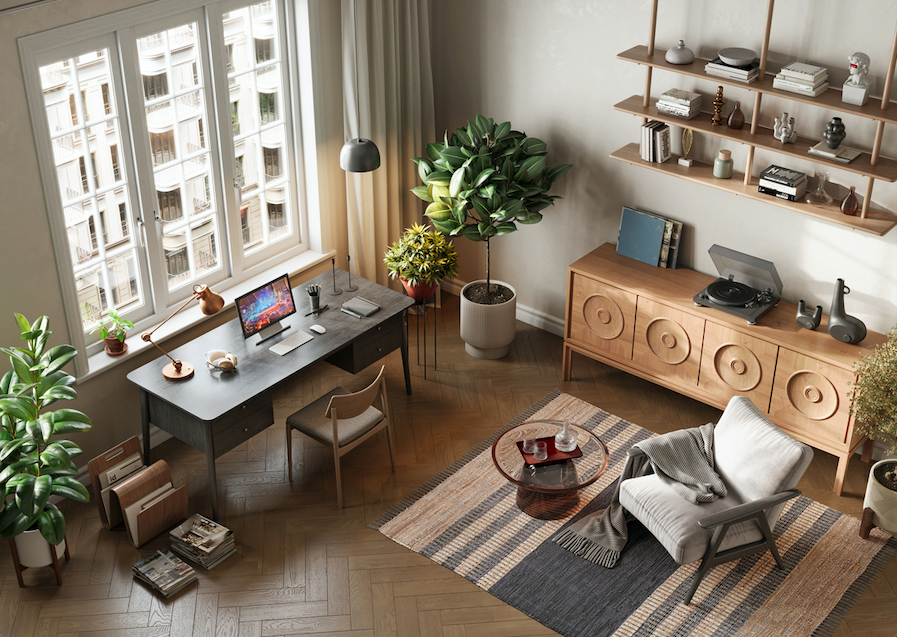
Once upon a time, the study room was reserved for the school-going members of the household. Fast-forward to today, and it’s become the universal home office, the place many of us spend as much (if not more) time in than the bedroom, especially if gaming is part of your nighttime routine.
This makes it all the more important for the space to actually work for you, and it’s no longer a matter of parking two desks side by side. Whether it’s a nook within a condominium unit or an entire bedroom in an HDB flat, here are some considerations to keep in mind when designing your study.
-
Multi-functionality
If you don’t work from home every day, the study can start feeling a little underutilised, which is practically a crime in an economy where every square metre costs an arm and a leg. So why not let the room earn its keep?
Add a Murphy or foldable bed and it instantly becomes a guest room, or carve out a corner for storage, which is always welcome in condos without a storeroom. If the layout permits, you could even lend some space to the adjoining room for a walk-in wardrobe in the bedroom or a roomier dining area in the living room.
-
Wi-Fi connectivity
With homeowners reconfiguring the cookie-cutter layouts of their apartments, it’s anyone’s guess which corner eventually becomes the study. But wherever it lands, make sure the spot has a stable internet connection, or risk freezing in every other Zoom meeting or letting your team down during an intense boss fight. Loop in your ID early and review where your telecommunication points should go. And if you’re working with a larger home or awkward layout, a mesh Wi-Fi system may be your best friend.
-
Lighting
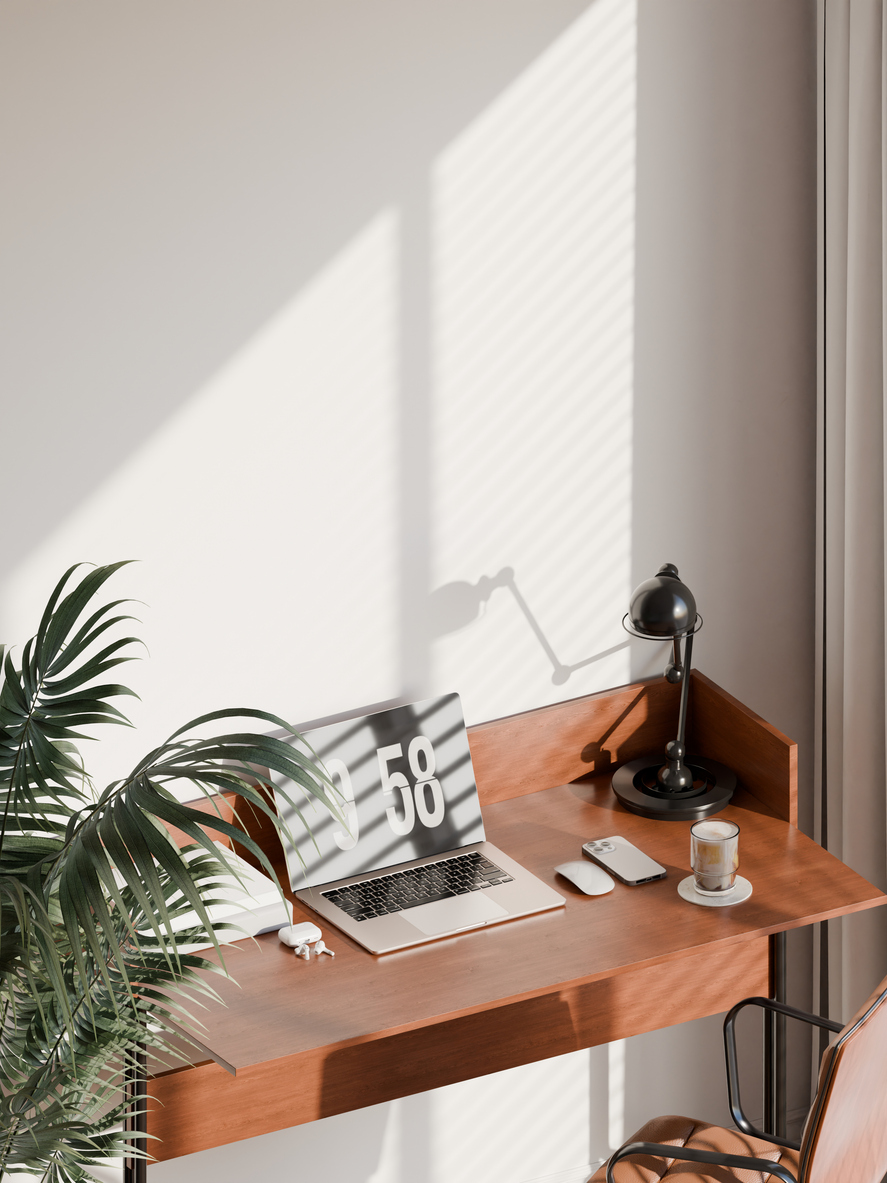
Everyone loves a home office with plenty of natural light: it keeps you alert, reduces eye strain, and makes the room feel more inviting. Just remember not to block it out with clunky overhead cabinets, and to position your screens to avoid mid-day glare. It also helps to have different lighting modes, especially if your study sees you through day and night. Our tip? Cool-white ceiling lamps in the day to stay focused and productive, and warm-white ambient and task lighting at night. The softer glow tells your brain it’s time to kick back and have a little fun.
-
Desks
Between a built-in desk and a freestanding one, it really depends on how flexible you need the room to be. The latter would make more sense if the study might one day become a nursery, but if it’s here to stay consider custom carpentry that can be tailored to your needs, whether that’s a compartment for your CPU or a spot for your printer.
Here’s another perk of committing to a built-in desk: You can coordinate the laminates with the rest of the home so the study doesn’t stick out like a sore thumb. But the permanence of a built-in workstation also means you have to get several details right, which brings us to the next point.
-
Seating
Desks may be the star of the study room, but you’d be remiss to overlook seating when planning a built-in workstation. While most desks sit between 70 and 75 centimetres high, the ideal height depends on your build. As a guide, your elbows should bend at roughly 90 to 110 degrees when seated.
If you like sitting cross-legged, make sure there’s enough clearance for comfort, which may mean shifting drawers to one side or placing them in the middle. Also, check your computer chair’s measurements when fully lowered to see if it actually tucks under the desk. Otherwise, it ends up hogging more floor space than necessary.
-
Semi-open layouts
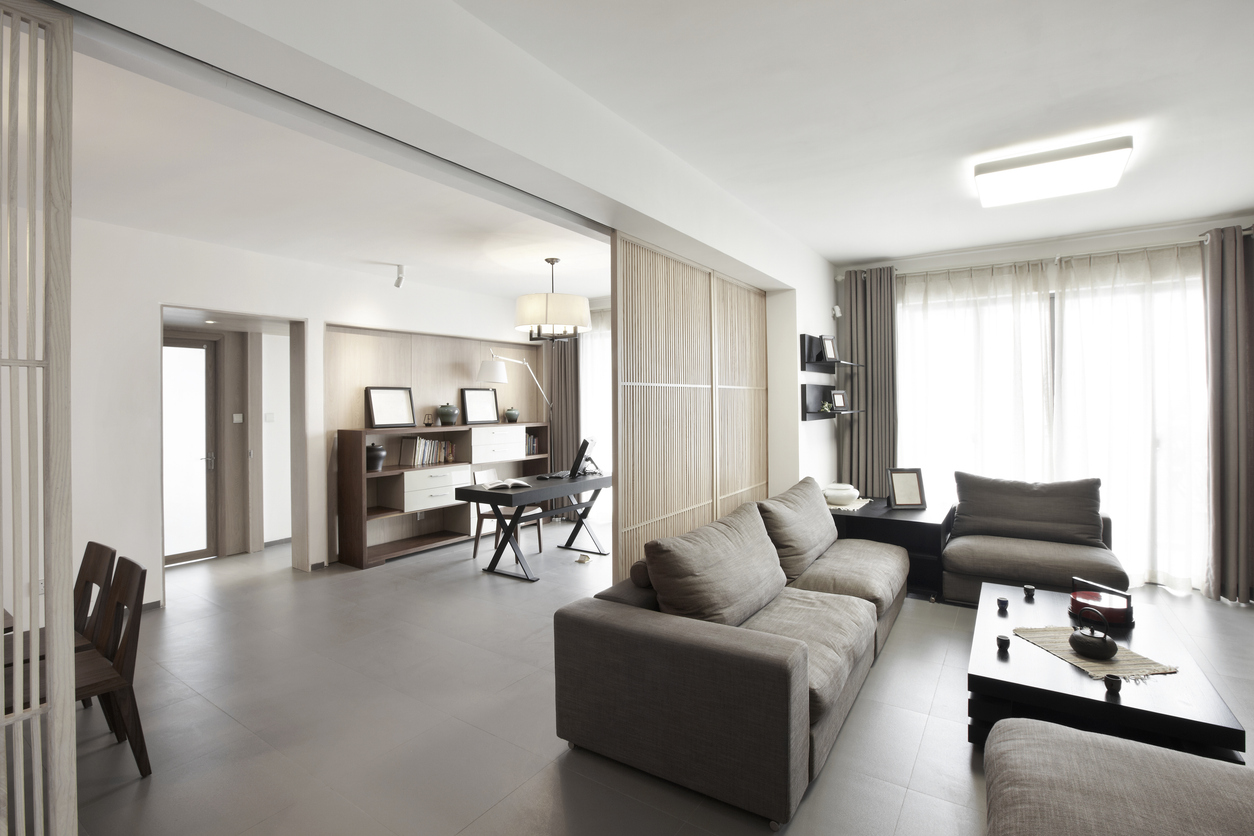
Semi-open studies are gaining traction, especially for homeowners who want a workspace that transforms into a social zone for game nights when the doors slide open. But how do you have the best of both worlds without compromising functionality?
The first rule is sound insulation. Collapsible doors and fluted-glass partitions look great, but consider adding seals to keep out noise, or layering soft furnishings like rugs, curtains or upholstered chairs to absorb it. Desk orientation matters too; you don’t want kids tearing through the background mid-call or the TV flashing across your screen.
And because a semi-open study adds visual clutter, it pays to invest in concealed cable management and built-in storage so it stays tidy even when it’s in full view from the rest of the home.
Words: Joyce Yang



