Think about how many times you turn on a light in a day. Chances are, you barely notice the switch. It’s one of those everyday objects that does its job without demanding much thought. For most homeowners, it is probably among the last few things to consider during a renovation.
For Massimo Buster Minale, the smallest details can have the greatest impact on how we experience a home.
The founder and creative director of London-based design brand Buster + Punch has spent more than a decade challenging the way we think about the ordinary details of a home. Light switches, dimmers, cabinet handles and other functional fittings are no longer simply things that need to work. In his world, they are objects worth looking at, touching and, perhaps surprisingly, getting a little excited about.
“We spend so much time staring at screens and swiping glass that we’ve almost forgotten how satisfying a physical interaction can be,” says Massimo, who was recently in Singapore visiting Sol Luminaire, the local distributor of Buster + Punch.
“Take one of our toggle switches. You feel the weight of the solid metal, the resistance of the mechanism and that unmistakable click. It’s a tiny moment, but it engages your senses and connects you to your surroundings in a real, physical way.”
Then comes a question that rather neatly sums up his design philosophy: “If you’re going to touch something twenty times a day, why shouldn’t it feel brilliant?”
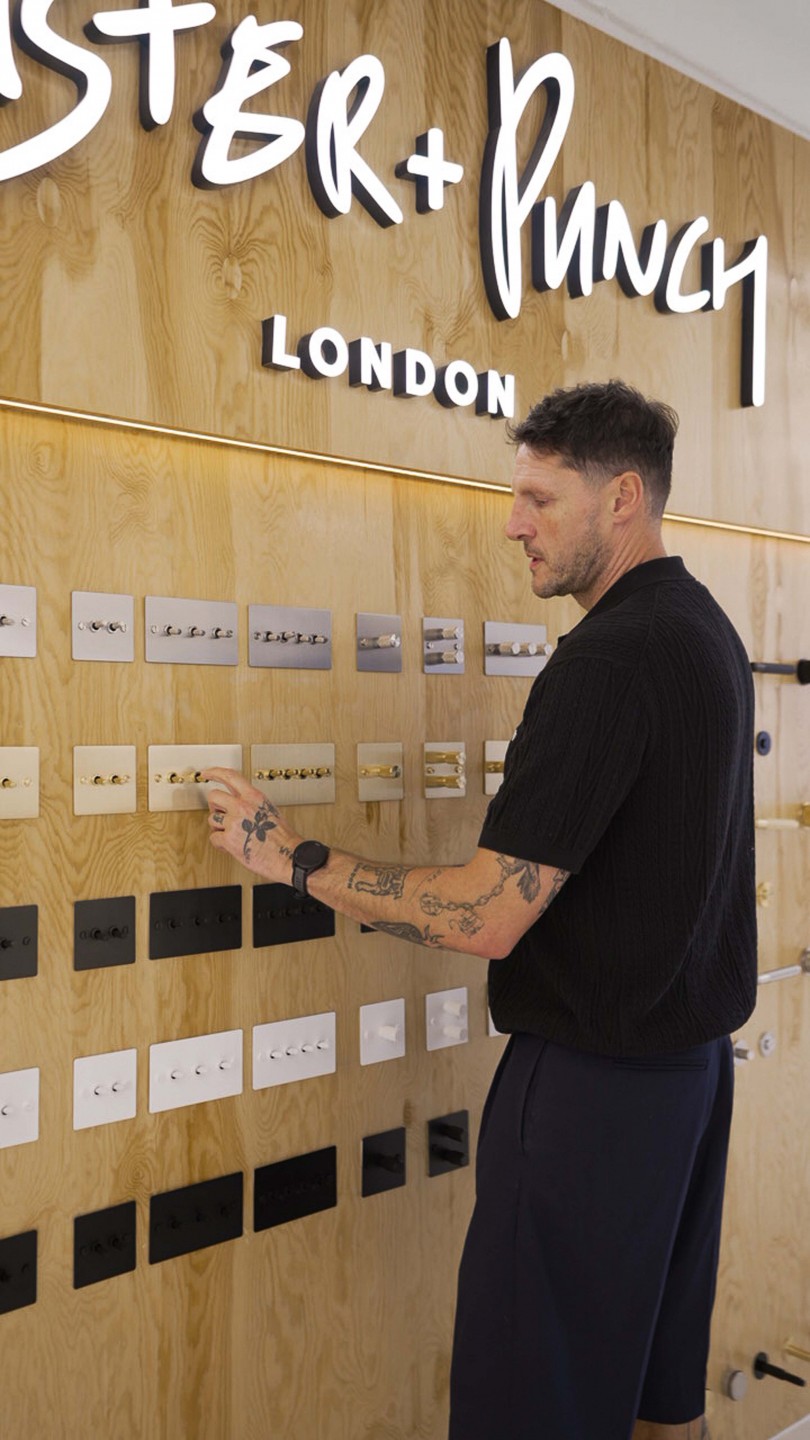
Architect by training, Massimo Buster Minale draws inspiration from motorbikes, music and fashion to create objects with an unmistakable industrial edge.
An unconventional beginning
Buster + Punch is not quite what you would expect from a conventional interiors brand. Although Massimo is an architect by training, the brand’s creative DNA owes just as much to the worlds of motorbikes, music and fashion as it does to architecture.
It is an unusual combination, but one that makes sense when you look at the products. There is something distinctly mechanical about the way Buster + Punch approaches design. Solid metals, precision detailing and an unapologetically industrial character give even the smallest fittings a sense of purpose and personality.
“I’ve never thought of Buster + Punch as a conventional interiors brand,” Massimo explains. “The roots are in architecture, but the attitude comes from motorbikes, music and fashion.”
That willingness to look beyond the interior design industry has also shaped some of the brand’s more unexpected collaborations, including projects with luxury carmaker Rolls-Royce and musician Travis Barker.
For Massimo, however, collaborations are not about attaching a famous name to a product.
“I’m not interested in putting two logos together and calling it a collaboration,” he says.
What matters is a genuine creative connection and a shared obsession with craftsmanship. Working with people from different disciplines introduces new skills, perspectives and ways of thinking, something he believes should benefit both sides of a partnership.
It is perhaps this openness to influences outside the home that makes Buster + Punch’s products so recognisable. Rather than trying to disappear into the background, they bring character to the everyday.
Small details, big impact
There is an interesting contradiction in the way we design homes today. We can spend weeks choosing the perfect stone countertop, debating paint colours or deciding on the right sofa, yet the objects we physically interact with most often receive relatively little attention.
Massimo sees an opportunity in that oversight.
“When we started Buster + Punch, hardly anyone paid attention to light switches. They were functional necessities, usually chosen at the end of a project. We saw the chance to make them part of a room’s character.”
It is a small shift in thinking, but one with a surprisingly large effect.
A switch is no longer just a piece of plastic on a wall. Its weight, finish, mechanism and the way it feels beneath your fingers all become part of the experience of a room. The same thinking can be extended to the other touchpoints around a home, from opening a cabinet to adjusting the lighting.
This emphasis on tactility feels particularly relevant at a time when so much of our lives is experienced through screens. We may be accustomed to seamless digital interactions, but there is still something deeply satisfying about a well-made physical object.
And when those interactions happen repeatedly, day after day, the details begin to matter.
Rethinking what luxury means
Luxury is a word that gets thrown around rather freely in the interiors industry. Expensive materials, exclusive collections and statement pieces are often presented as the ultimate expressions of living well.
Massimo has a more personal interpretation.
“Luxury is personal. It’s not necessarily about price or exclusivity, but the connection you develop with an object, a material or even a brand.”
Craftsmanship and quality remain important, of course. But what interests him more is the relationship that develops between a person and the objects they live with.
“Real luxury is something you live with and grow attached to. That relationship gets stronger over time.”
It also explains the brand’s commitment to solid metal.
Unlike finishes that are designed simply to look a certain way, metal has physical weight and substance. It responds to touch, reflects light and develops character as it ages. These qualities are not incidental to the design. They are part of what makes an object worth keeping.
“An object shouldn’t lose its appeal after a season. It should mean more to you the longer you own it and be designed with that intent in mind.”
It is a refreshing perspective in a market where newness often takes precedence over longevity. Instead of asking whether something looks luxurious today, Massimo is more interested in whether it will still feel special years down the road.
Making a good thing better
Of course, creating something recognisable presents another challenge. How do you improve a design without losing what made people fall in love with it in the first place?
It is a question Buster + Punch has had to consider with the recent refresh of its signature toggle and dimmer switches.
“Our switches helped put Buster + Punch on the map, but that doesn’t mean they’re untouchable,” says Massimo.
The brand continues to examine everything from engineering and mechanics to the smallest visual details, looking for ways to improve the experience while retaining the character of the original designs.
One of the more significant developments is a greater emphasis on modularity.
Rather than treating a switch as a fixed object, the updated approach allows customers to change its function as their needs evolve. Detail kits also make it possible to tailor the appearance without having to rethink the entire fitting.
For homeowners, it introduces a more flexible way of approaching the finer details of a room. A fitting chosen during a renovation does not necessarily have to remain exactly the same as tastes, interiors and lifestyles change.
“Sometimes the smallest refinements have the biggest effect,” Massimo observes.
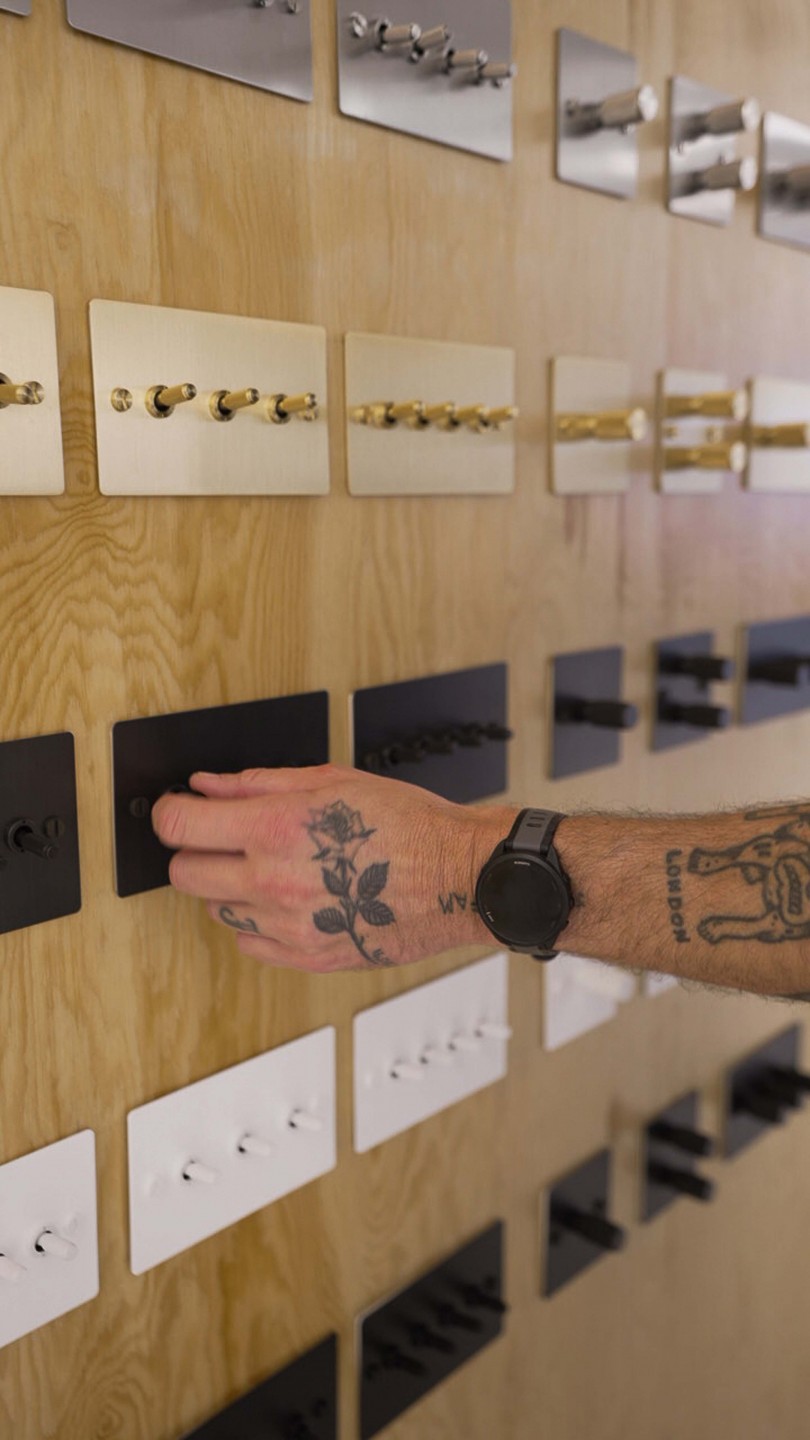
Available in Singapore through Sol Luminaire, Buster + Punch brings its distinctive solid metal fittings to local homes.
A warmer side of industrial design
Another development is Warm Sunset, a new finish that introduces a softer dimension to Buster + Punch’s typically industrial aesthetic.
Developed as part of the brand’s collaboration with German bathroom fittings label GROHE SPA, the colourway explores the richness and warmth of metal rather than relying on a flat decorative colour.
“It has a softness that plays against the industrial edge of our products, and I like that contrast,” Massimo explains.
For him, a finish does more than change how a product looks. It affects the way an object responds to light, how it relates to surrounding materials and, ultimately, how it contributes to the atmosphere of a room.
The GROHE SPA collaboration, launched during Milan Design Festival in April, takes this thinking further.
Together, the brands have developed what Massimo describes as a toolkit for creating a seamless solid metal aesthetic throughout bathrooms, wet rooms and spa environments.
By coordinating finishes across different fittings and touchpoints, designers can create a more cohesive expression without relying on a single statement piece to carry the space.
It is an approach that feels particularly relevant to contemporary bathrooms, where material consistency and attention to detail can make even relatively simple spaces feel considered.
Looking East
Massimo’s recent visit to Singapore also forms part of a wider interest in Asian markets and the region’s evolving design culture.
As an architect, he is particularly fascinated by the relationship between people and their surroundings, and how different cultures approach the spaces they inhabit.
“Asia has such a diverse design culture, with traditions of craftsmanship and precision sitting alongside progressive architecture and technology,” he says.
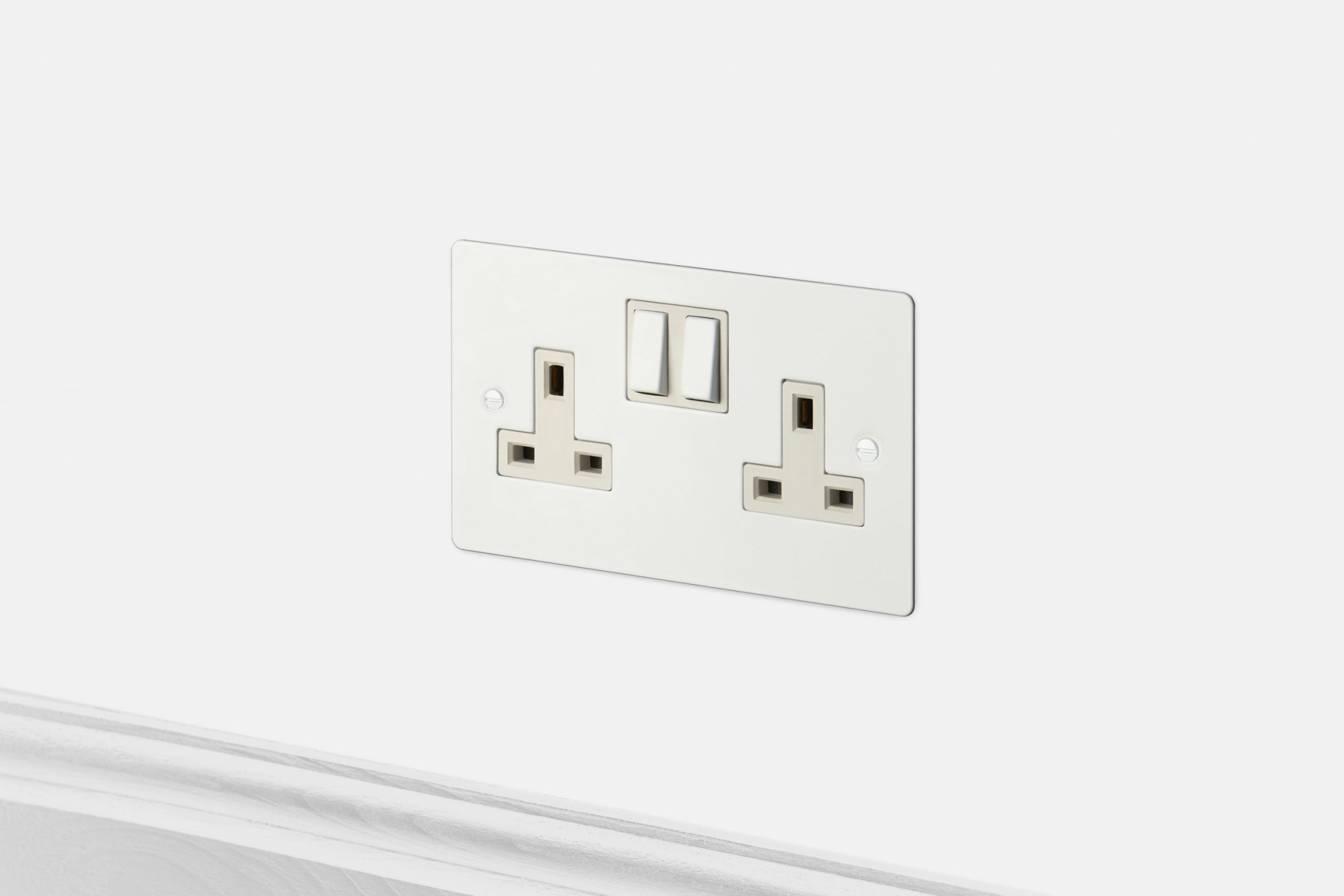
Some of our picks from Buster + Punch include the 2G Socket in White, a sleek take on an everyday essential that proves even the most functional details deserve a little design attention.
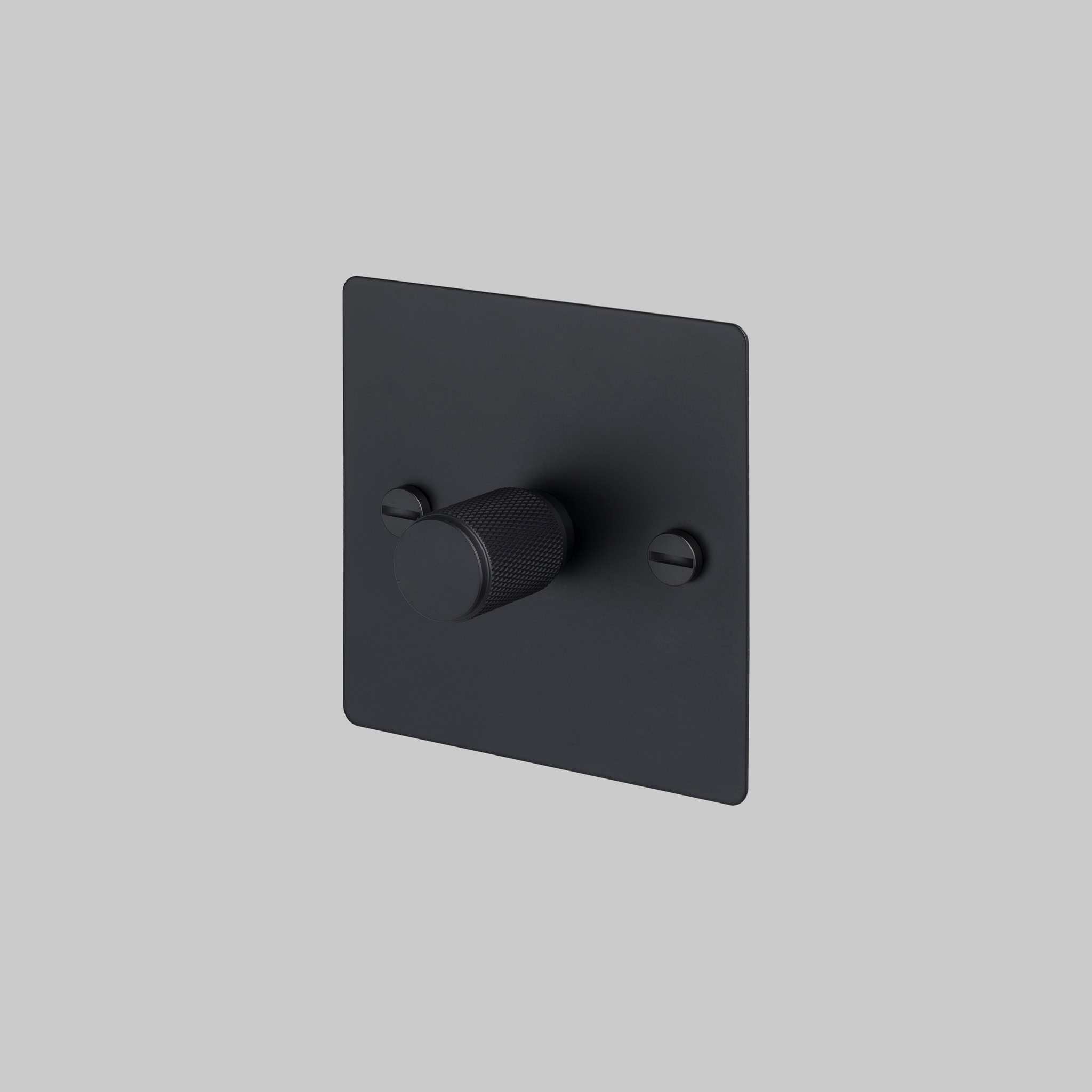
With its distinctive metal dial and industrial character, the 1G Dimmer Switch turns a simple adjustment into a satisfying tactile experience.
It is the coexistence of these qualities that interests him most, particularly the attention given to materials and detail.
While he recognises similarities with Buster + Punch’s own philosophy, he is equally interested in the differences.
“That’s where you learn something.”
With Buster + Punch available locally through distributor Sol Luminaire, Singapore homeowners and designers have an opportunity to experience that philosophy beyond photographs and product specifications. After all, a brand built around tactility is perhaps best understood through touch.
Buster + Punch’s distinctive switches and sockets are available in Singapore through Sol Luminaire.


