In downtown Kuala Lumpur, where the city’s pace rarely dips, Else stands as a hotel shaped around the simple idea of slowing down. Set between the patina of Chinatown and the pulse of the modern city, the property introduces a different kind of hospitality, one rooted in spatial clarity, grounded materials, and a sensitivity to how travellers actually feel when they arrive.

Designed by Studio Bikin, the interiors are guided by a philosophy of duality: light and shadow, raw and refined, tactile and streamlined. This becomes immediately evident in the palette. Rather than relying on saturated tones or dramatic gestures, the designers opted for earthy hues and breathable lime-based paints that quiet the senses. Across the hotel, natural textures are layered with restraint, allowing materials to drive the emotional register of the space.
Stepping inside feels like crossing a threshold from overstimulation to softness. Acoustics drop, the light diffuses, and circulation paths reveal themselves through calm, elongated corridors lined with natural jute. These woven surfaces do more than soften footsteps—they form part of the hotel’s grounding rhythm, guiding guests intuitively through pockets of stillness and transition.
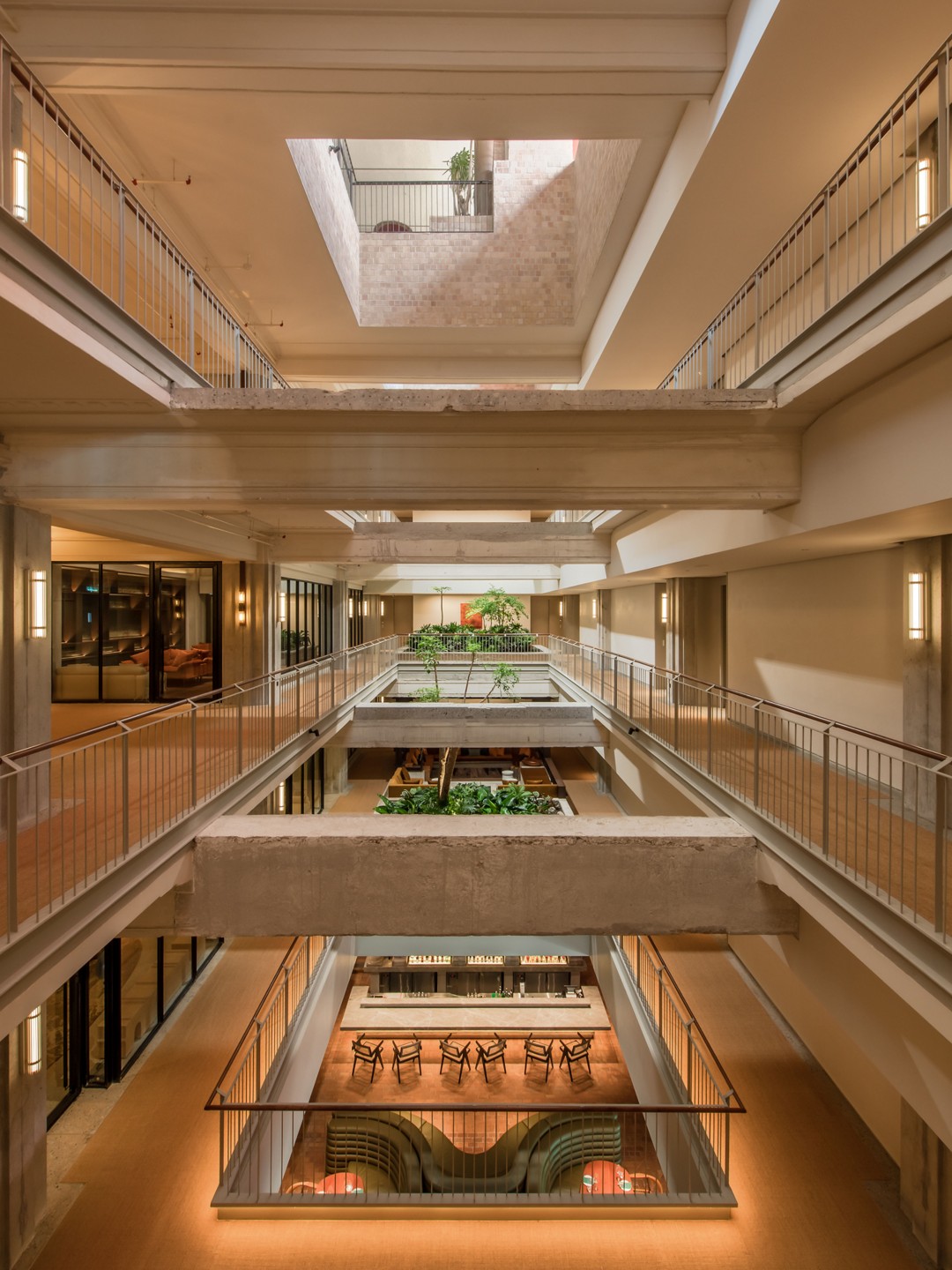
Materiality is the backbone of Else’s design language. Locally crafted finishes anchor the interiors to their cultural context: handwoven panels, timber joinery, textured brick walls, rattan accents, concrete planes, and vintage pieces layered with quiet confidence. Every surface invites touch, encouraging guests to experience the building as a landscape of textures rather than a backdrop. Studio Bikin describes the effect as a “sensorial experience,” where the architecture and interiors work in tandem to restore balance after the jolt of long travel.
One of the most defining architectural interventions is the insertion of new voids into the existing structure. These carved-out atriums pull daylight deep into the building, transforming what was once a dark interior into an ever-shifting choreography of light and shadow. As guests move vertically and horizontally through the hotel, these openings frame unexpected viewpoints, moments of pause that create spatial rhythm and encourage slower movement. Light becomes a material in itself, shaping the mood of each floor and creating a visual counterpoint to the density of the city outside.
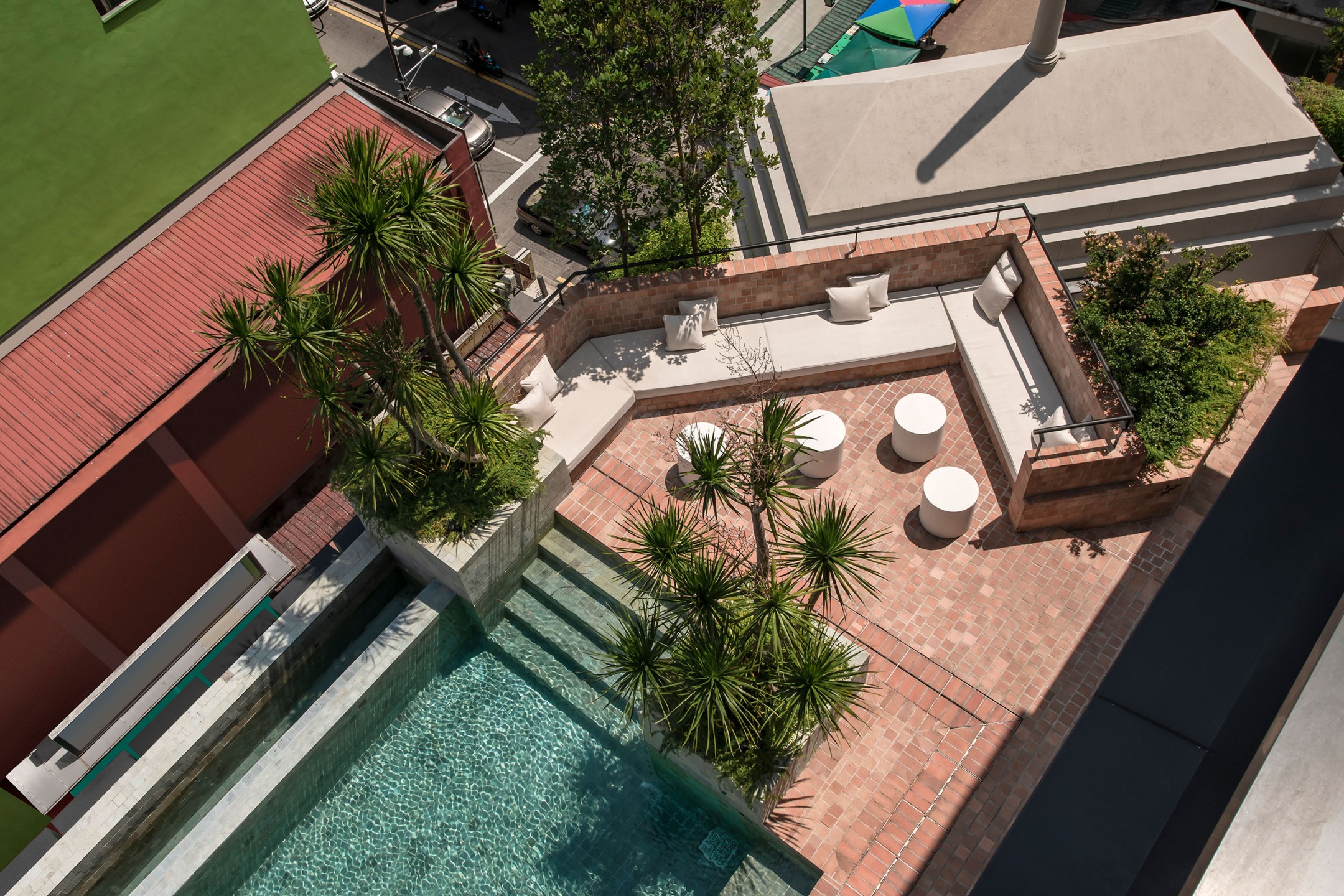
Throughout the hotel, raw and refined elements are calibrated carefully. Textured concrete meets warm timber; woven crafts sit against sculptural furniture; vintage Malaysian pieces coexist with contemporary forms. Together, they create a layered narrative of place that feels both modern and deeply rooted. The composition is neither rustic nor minimalist—it’s a quiet tropical modernism that privileges tactility and comfort over spectacle.
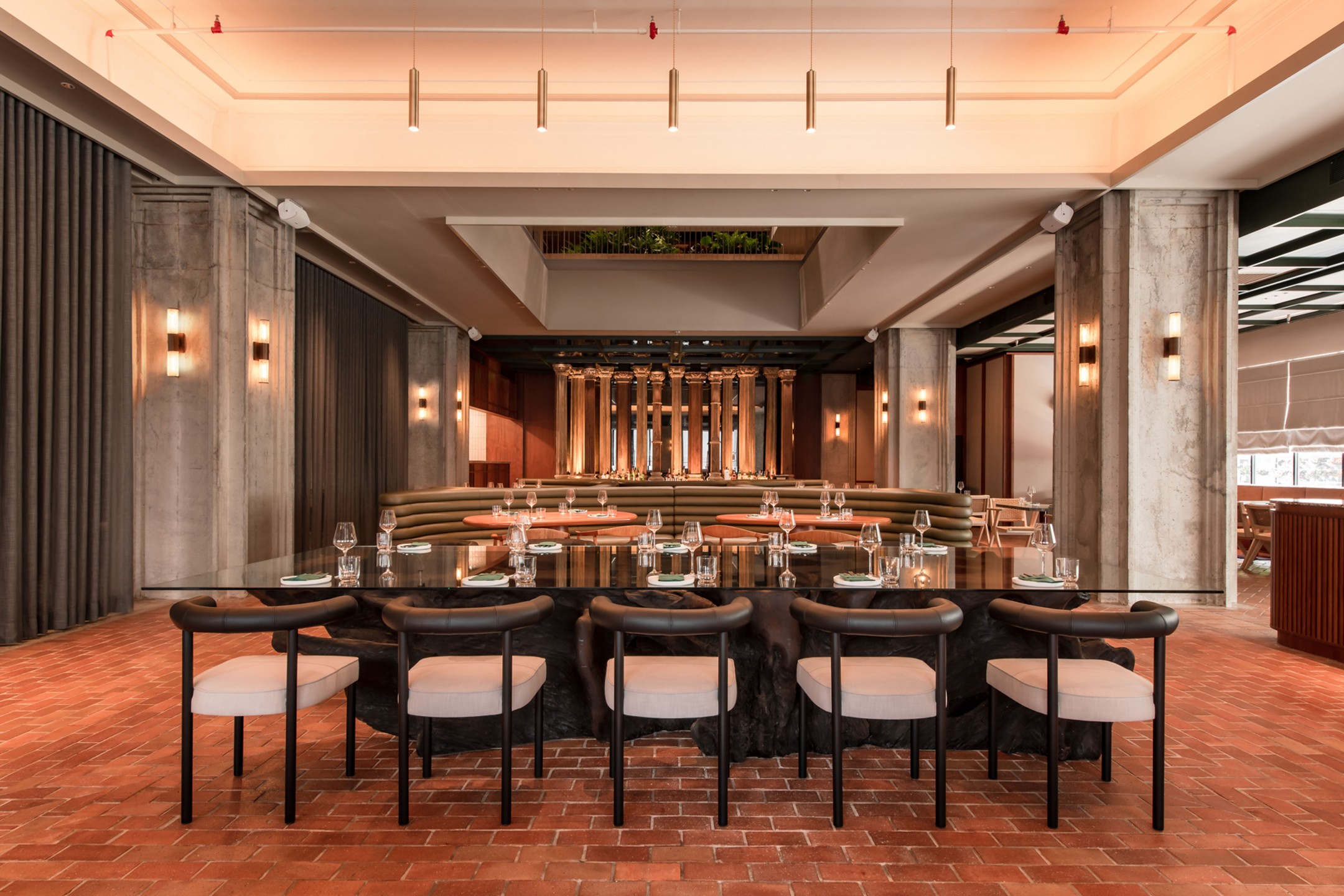
Some of Else’s most compelling details are also its most understated. In the guest rooms, handwoven bedhead panels crafted by Bidayuh and Penan artisans in Sarawak bring depth, history, and human touch into the spaces. In the corridors, jute flooring subtly absorbs sound, enhancing the hotel’s cocoon-like quiet. Near the pool, reclaimed terrazzo benches engraved with the original Lee Rubber Building logo offer a soft nod to the site’s past life. And in Raw Restaurant, a curvilinear leather sofa inspired by Ubald Klug’s Terrazza series introduces sculptural softness, anchoring the room with a sense of invitation.
Individually, these choices might seem modest. Together, they form the interior ethos of Else, a hotel where design is not used to impress but to restore. In an urban landscape defined by constant motion, Else chooses stillness. It offers travellers not a performance, but a pause. And for the jet-lagged, that may be the greatest luxury of all.
Visit Else Kuala Lumpur to discover the full sensory journey.



