When interior designer Maggie Tan saw her client’s name flash in her inbox, she did a double take.
“I was very surprised, but also a bit confused, wondering which owners from Strathmore Avenue were contacting me after 20-over years,” recalls the Principal Designer of Interior. Alpha Movements Pte Ltd.
Her confusion was understandable. She had renovated four homes in that neighbourhood back in the nineties when she first started out. But the moment the homeowner sent photos of their old space, it all came rushing back. The timber-veneer cabinetry, the black-galaxy kitchen countertop, the parquet in the bedrooms – all hallmarks of a bygone era.
 Two decades on, the family’s needs look very different. The homeowner is preparing for her golden years, putting wheelchair accessibility and easy maintenance at the top of the list. Her daughter, now in her 30s, has also outgrown the clunky carpentry and needs far more storage. What they wanted was simple: a refresh that would make the home equal parts functional, accessible, and easy on the eyes.
 In response, Maggie proposed a modern minimalist home for this new season of life. And unlike many gut-and-rebuilds, this 5-room flat didn’t require a dramatic overhaul. Instead, she focused on making small adjustments to the layout to better suit the family’s everyday routines.
At the foyer, the ceiling was lowered to create a cosy greeting zone lined with a long sitting bench and concealed shoe storage. Homogeneous tiles make cleaning effortless, while a pocket sliding door neatly hides the household shelter.
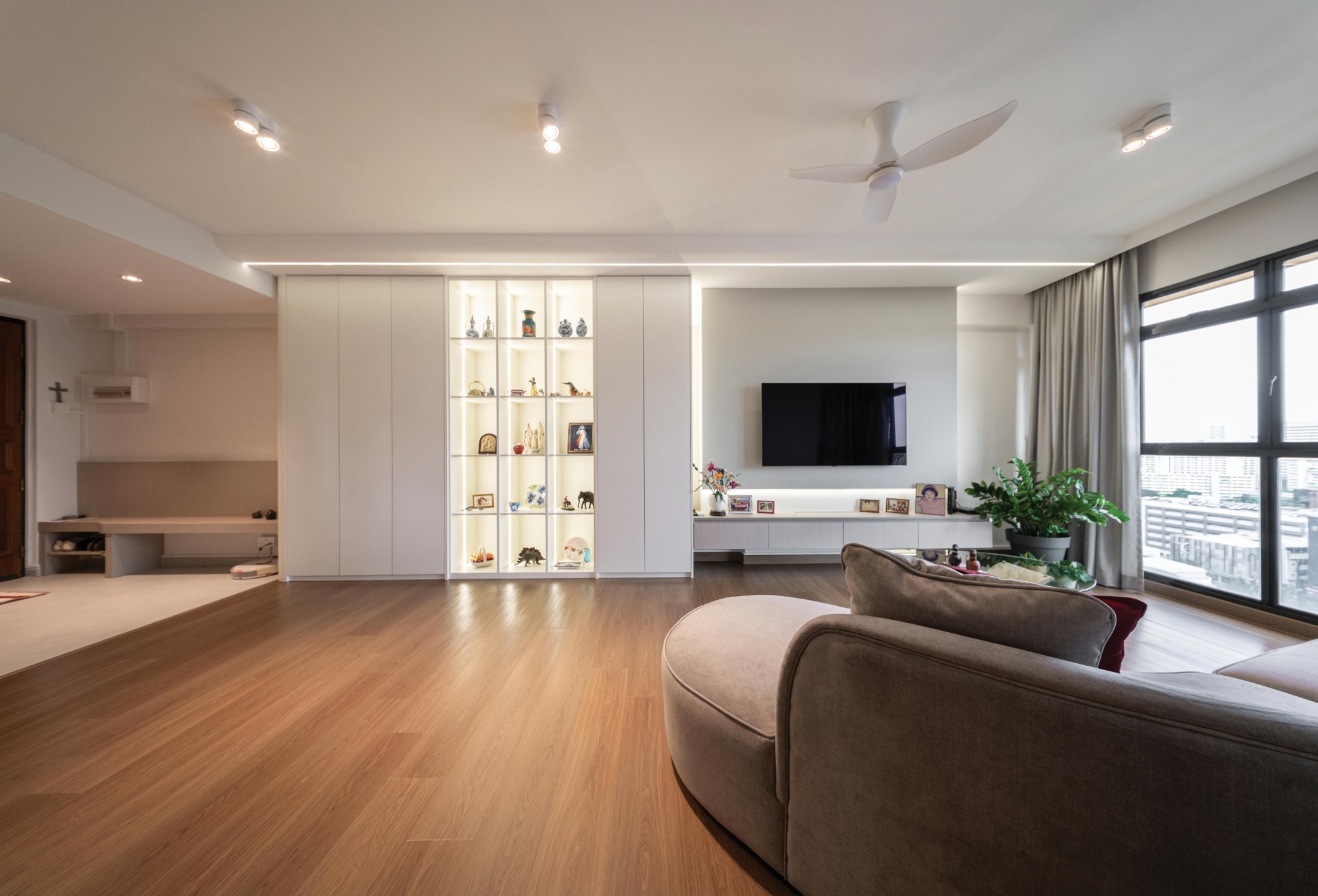
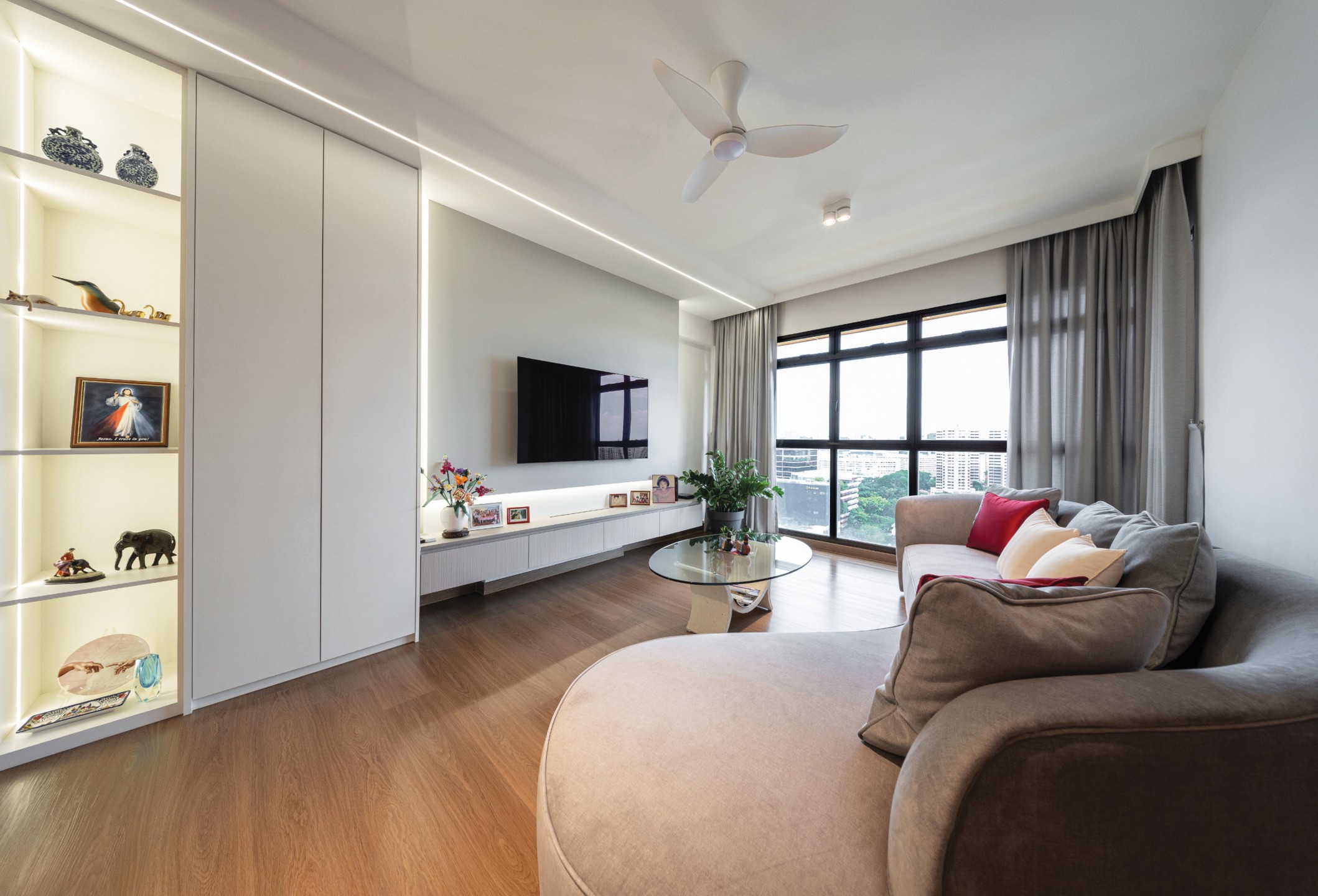
Previously, the foyer had been sectioned off with a divider. With that removed, the living room now benefits from an open-plan layout. A long run of full-height cabinetry maximises vertical storage and keeps the floor clutter-free.
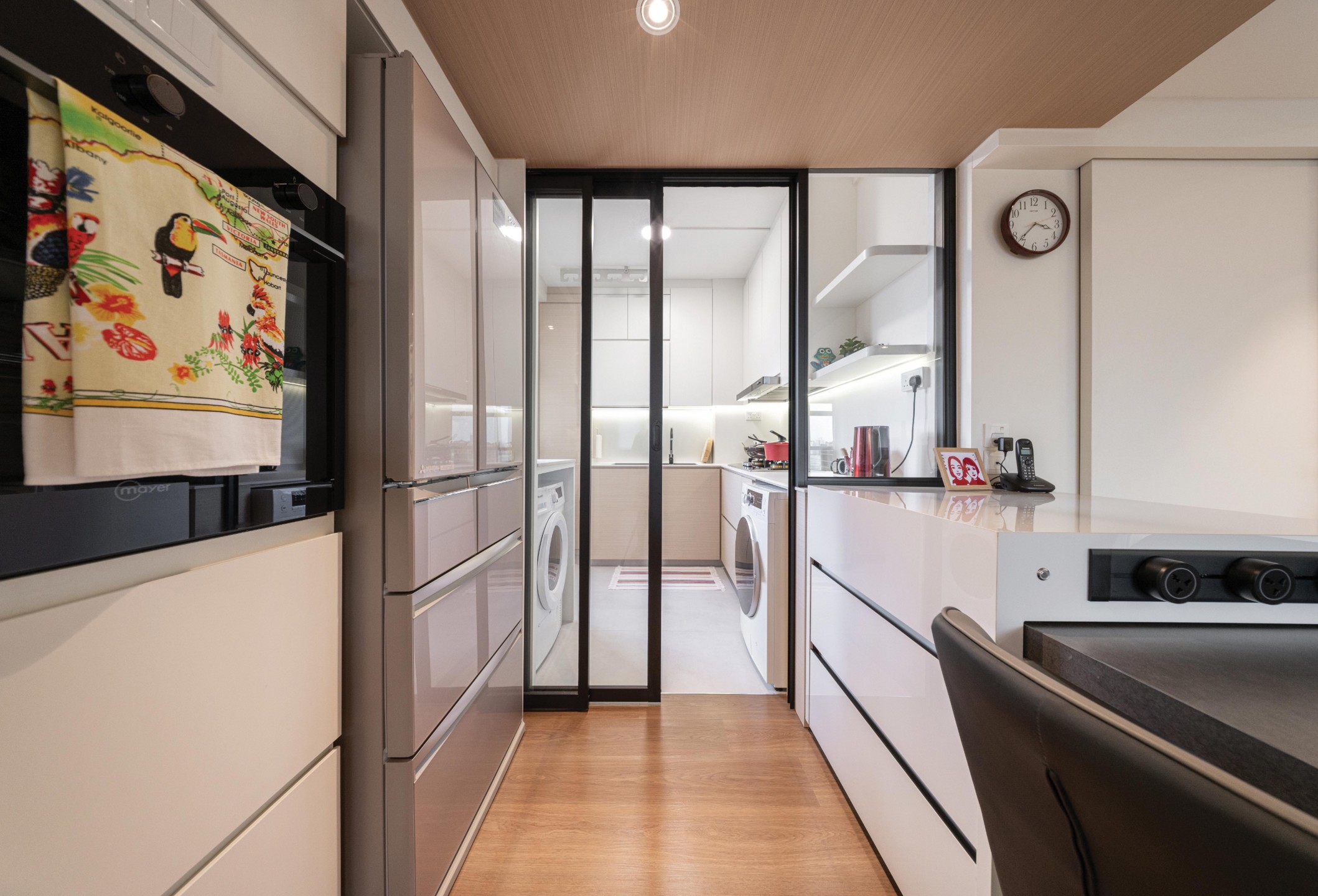
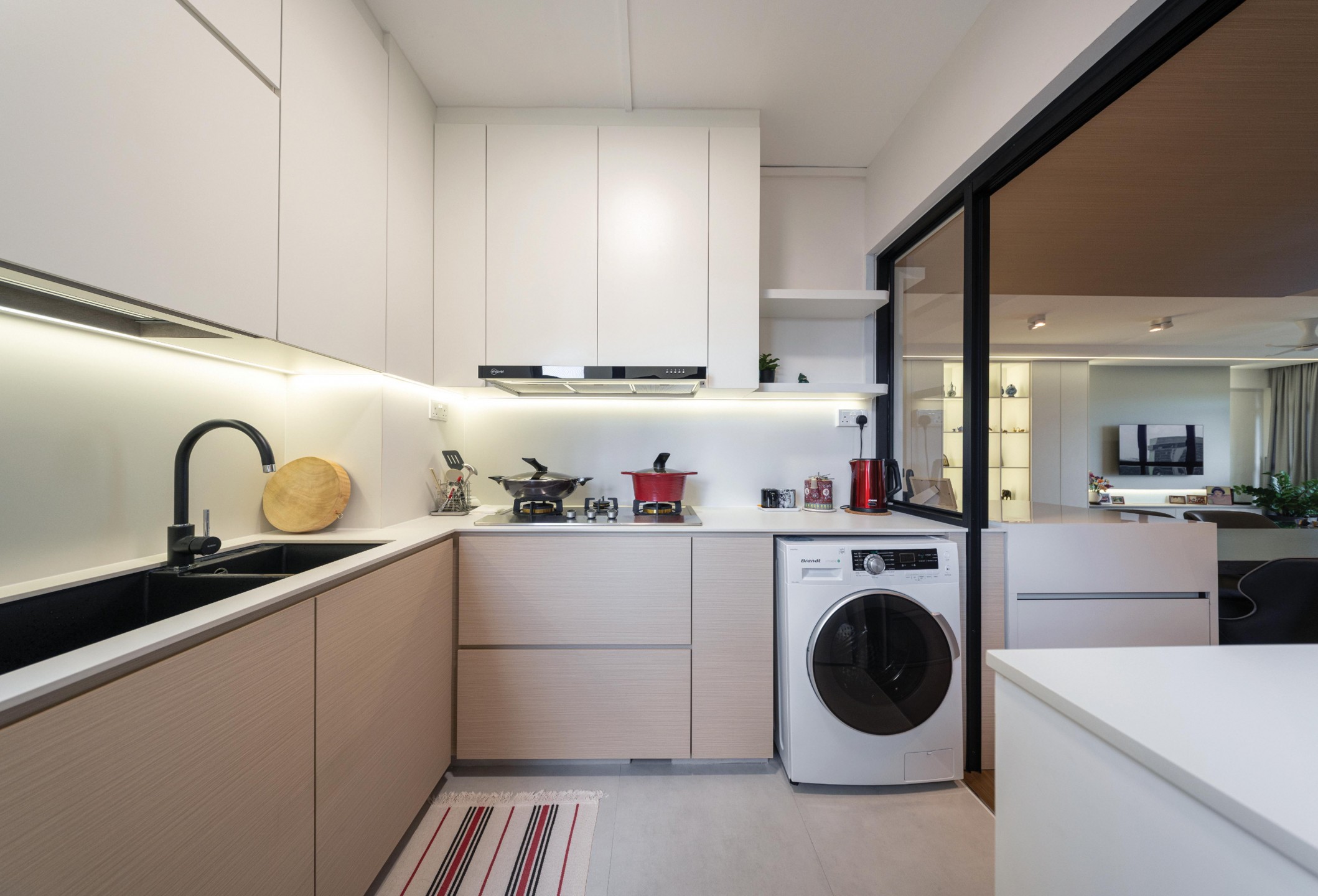
That sense of spaciousness extends to the dining area. Since cooking is no longer a daily affair, the wet kitchen was downsized to hold only the essentials. This made room for a working counter, dry pantry and a six-seater dining table just beyond the sliding door. In turn, the former dining zone has been cleared, ensuring manoeuvring space when a wheelchair enters the picture.
“We focused on functionality and smooth movement by balancing ‘positive’ space occupied by furniture with ‘negative space’ where clutter is kept to a minimum,” Maggie explains.
With the communal areas opened up, she also had to find ways to visually segment them. One method was through materials, such as defining the dining area with a timber ceiling that echoes the warm wood tones of the flooring.
“Light, neutral color palettes can make a space feel larger and airier, but they also have a cold feeling. So we chose timber vinyl flooring and grey-tone curtains to balance the coldness of the space,” she says.
Another method was the strategic placement of furniture and fixtures. The three display columns in the living room, for instance, are perfectly aligned with the passageway leading to the bedrooms, which continue the palette of wood tones and white laminates.
“To ensure all design elements work harmoniously to create a consistent flow throughout the space, we often achieve it through repeating colors, materials, or design lines.”
To meet the daughter’s needs, the wall between her bedroom and the master was removed, making space for a study table, an upsized wardrobe and a bedframe with drawers to accommodate her growing need for storage.
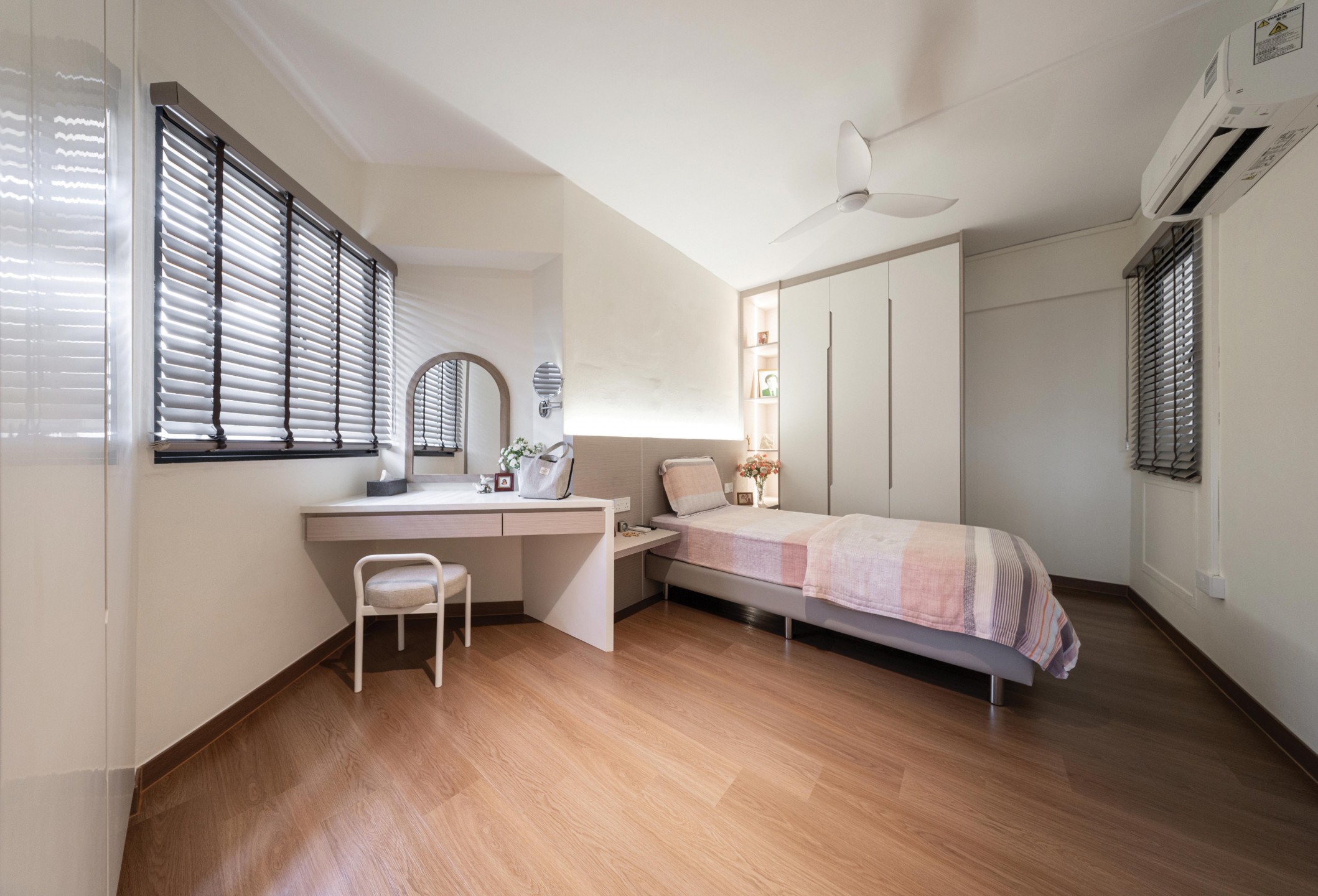
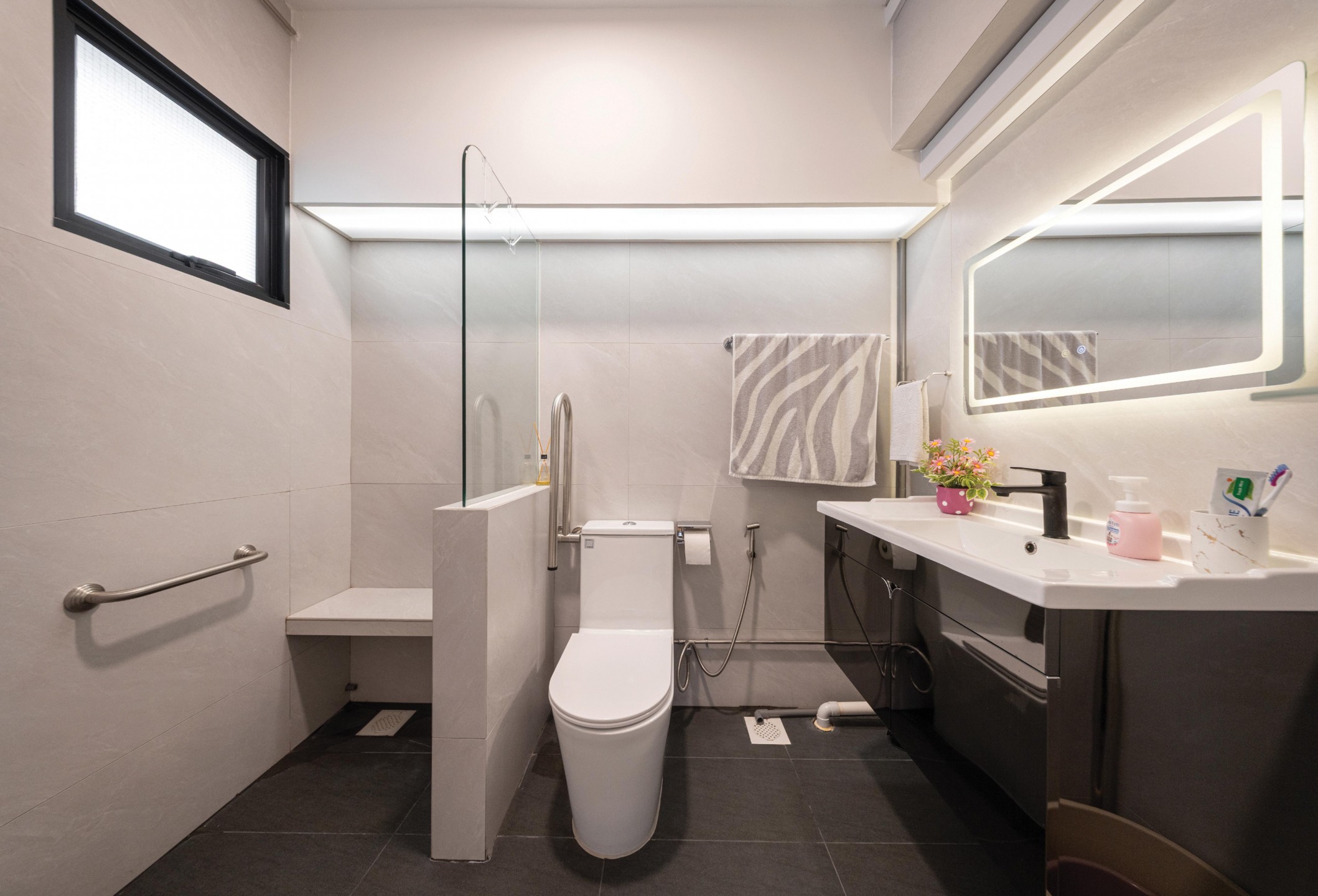
Despite this adjustment, the master bedroom remains open and navigable for a future wheelchair, with accessibility built in from the start. An awkward corner that came with the unit has been transformed into a floating vanity with ample clearance beneath. In the master bathroom, a shower seat and grab bars make bathtime safer and more comfortable for the years ahead.
For Maggie, handing over the same project a second time was a full-circle moment and a rare chance to reflect on how the space, its occupants, and even the designer herself have grown over the past 20 years. As she puts it, “I am honoured to be given the opportunity to design the same house twice.”
Explore more of Maggie’s work and design philosophy at
Interior. Alpha Movements Pte Ltd.
Words: Joyce Yang


